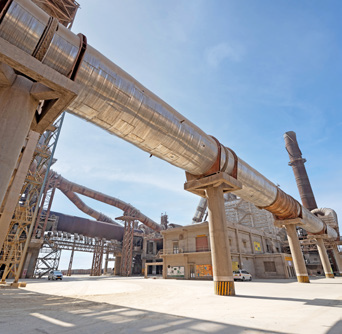
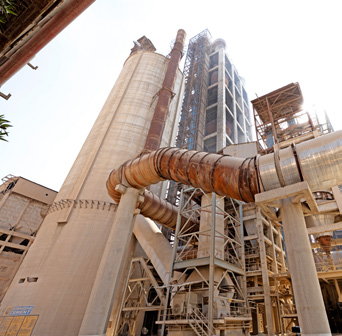
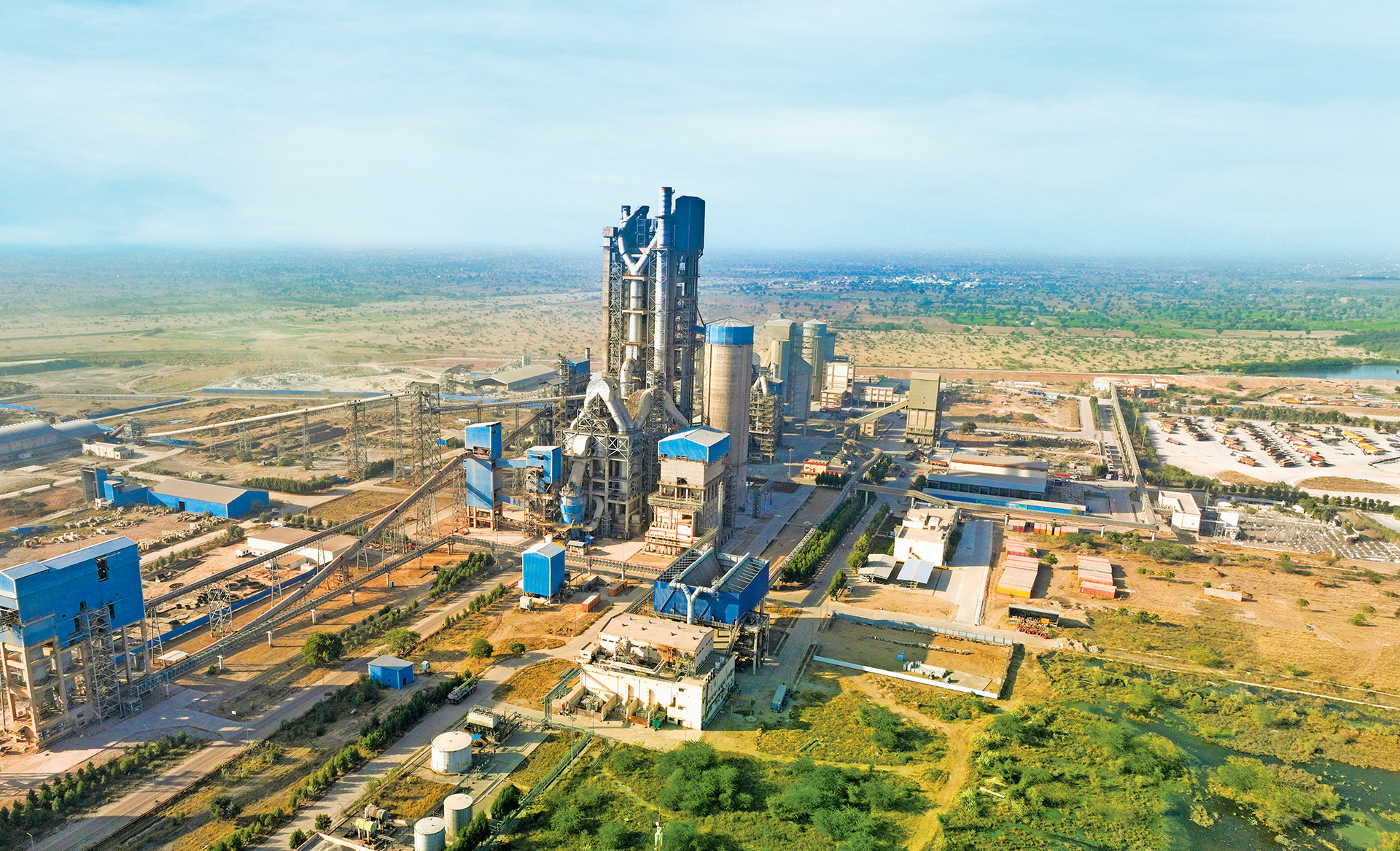
Capacity Expansion
Ambuja Cements made strides to
expand its capacity in FY 2025–
26. Consolidated cement capacity
reached 109 MTPA during the
year. It aims achieve its target of
119 MTPA capacity in a structured
and phased manner by
FY 2026-27.
During the year, the Company
commissioned new grinding capacities across Marwar,
Farakka, Sankrail, Sindri,
Krishnapatnam, alongside
additional clinker units at Jodhpur
and Bhatapara. These additions
enabled the Company to achieve
its FY 2025-26 capacity milestone
while maintaining operational
stability and a predictable rampup trajectory. With an aim to
increase its capacity to 119 MTPA
by FY 2026-27, the Company continues to focus on consciously
shifting towards stabilising
newly commissioned capacities
and improving utilisation across
the existing base. This mix of
new greenfield and brownfield
additions, coupled with low capex
debottlenecking, underpins the
Company’s constant focus on
rapid scaleup and its long-term
growth trajectory.
Projects Scheduled for
Completion in FY 2026-27 |
Unit |
State |
Capacity (MTPA) |
| Clinker |
Cement |
| Salai Banwa |
GU |
Uttar Pradesh |
- |
2.4 |
| Dahej Line-2 |
GU |
Gujarat |
- |
1.2 |
| Kalamboli |
GU |
Maharashtra |
- |
1.0 |
| Bathinda |
GU |
Punjab |
- |
1.2 |
| Jodhpur - Penna* |
IU |
Rajasthan |
- |
2.0 |
| Warisaliganj |
GU |
Bihar |
- |
2.4 |
| Maratha Line 2 |
CU |
Maharashtra |
4.0 |
- |
| Total Capacity |
4.0 |
10.2 |
*3 MTPA clinkering line at Jodhpur commissioned.
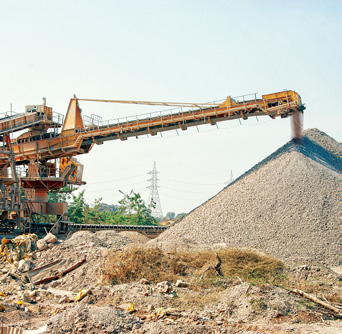
Captive Raw Material Resources
Ambuja Cements has strengthened
its limestone resources, now
estimated at around 10.95 billion
tonnes, securing long-term raw
material availability and supporting
sustainable, uninterrupted
production.
Enhancing Efficiency
Ambuja Cements continues to invest
strategically across its operations
to strengthen market presence and
build a durable cost advantage. The
Company’s efficiency-led approach
focuses on reducing clinker factor,
improving energy performance,
optimising raw material and fuel
blends, strengthening power
sourcing, and increasing the use of alternative fuels and raw materials.
These initiatives are further amplified
through digital enablement, including
real-time process optimisation,
predictive maintenance, advanced
analytics and automated quality
control systems that unlock higher
reliability and operational precision.
The integration of AI and advanced
technologies across the value chain is
enhancing plant-level efficiency and
reinforcing cement’s role as a catalyst
for faster, future-ready growth.
Supported by Adani Group synergies
across logistics, energy, procurement
and digital infrastructure, Ambuja is
accelerating throughput, improving
asset resilience and achieving superior
manufacturing efficiency—creating
a future-ready, competitive and
sustainable production ecosystem.
With an aim to increase its capacity
to 119 MTPA by FY 2026-27, the
Company's focus is consciously
shifting towards stabilising newly
commissioned capacities and
improving utilisation across the
existing base. By prioritising higher
utilisation and operating efficiency,
the Company is strengthening the
ability to meet its overall growth
objectives while overcoming nearterm hurdles through disciplined
execution with further capacity
additions being pursued more
gradually once optimal utilisation
levels are achieved, reflecting
disciplined capital allocation and a
focus on return on capital employed.
CASE STUDY

Enhancing Efficiency through In-plant Automation
Ambuja Cements introduced
in-plant automation to tighten
vehicle access, automate
weighment and streamline
documentation at packing plants.
By linking order allocation to
gate entry, deploying automatic weighbridges and auto-generated
invoices, the Company eliminated
manual interventions, reduced
weight variances and shortened
processing times. The initiative
improved driver safety and
site discipline, enhanced real-time visibility of operations
and delivered measurable cost
savings through lower errors,
faster throughput and reduced
manpower needs strengthening
both efficiency and control across
the logistics funnel.
CASE STUDY
Mechanised Raw Material Sampling to Enhance Safety, Accuracy and Efficiency
Ambuja Cements replaced
manual, time-consuming and
inconsistent raw-material
sampling with a mobile,
mechanised sampling system at
its Marwar Mundwa unit.
A hydraulic auger now extracts
representative samples directly from wagons and trucks to a
fixed sampling point, removing
bias and safety risks associated
with manual sampling. The
solution delivers consistent topto-bottom samples for materials
such as gypsum, china clay and
coal, speeds up receipt processes,
improves traceability and transparency, and enhances onsite safety and labour efficiency.
Overall, the mechanised system
has reduced sampling time,
raised sample reliability and
strengthened materials control
across inbound supply streams.
Raw Material and Fuel Security
Raw materials cost reduced by 4%
on an annual basis, driven by the
benefits of long term arrangement,
group synergies and benefits from
various capex investments made.
Looking ahead, costs are expected
to moderate as multiple optimisation
initiatives gain momentum,
however, we continue to focus
on improving our cost discipline.
These include long-term sourcing
arrangements for key raw materials,
infrastructure upgrades for efficient
material handling and increased
use of lower-cost substitutes.
Furthermore, cost efficiencies
are anticipated through higher
captive fuel utilisation, enhanced
fuel flexibility, greater adoption of
green power and alternative fuels,
and targeted capital efficiency
programmes, collectively supporting
sustained improvement in operating
performance.
Partnership with CONCOR (Container Corporation of India Limited)
Ambuja Cements is set to
benefit from a Memorandum of
Understanding (MoU) signed
between Adani Cement and
CONCOR in FY 2025–26 to
scale up rail-based bulk cement
transportation through specialised
tank containers. The collaboration will deploy dedicated container
rakes across key rail corridors,
leveraging the Indian Railways
network to enable a modal shift
from road to rail. This initiative
is expected to optimise logistics
costs, enhance efficiency and
reliability, and support supply chain decarbonisation, while
strengthening Ambuja Cements’
journey towards cost leadership
and its Net Zero 2050 ambition.
The partnership also lays the
groundwork for the future
development of Bulk Cement
Terminals.
Agnigati: Ambuja Cements’ National Logistics Meet and Digital Logistics Platform
On 19 August 2025, Ambuja
Cements convened Agnigati -
The National Logistics Meet, a
flagship industry gathering that
brought together more than 200
transporters, warehousing partners,
service providers and logistics
leaders to share innovations and
align on a greener, more efficient
logistics future. The event served
as a collaboration forum and a
launchpad for Ambuja Cements’
logistics digitalisation agenda,
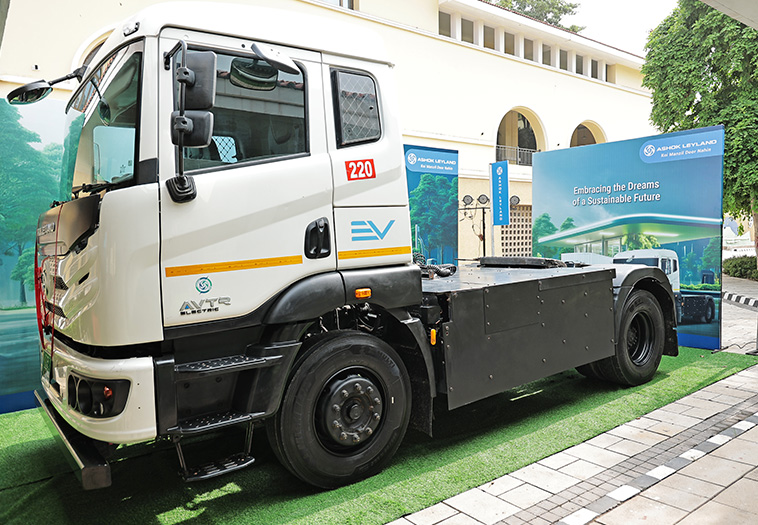
showcasing electric-vehicle pilots,
port-linked grinding solutions and
best practices for sustainable, highperformance supply chains.
At the heart of Ambuja Cements’
logistics transformation is
Agnigati—a fully digital, end‑to‑end
logistics orchestration platform
that is redefining speed, accuracy
and transparency across
the Company’s supply chain.
Agnigati seamlessly integrates
trip generation, order allocation
and in‑plant gate operations
with real‑time delivery‑order
creation, automated invoicing and
livestock‑transfer management,
ensuring faster and error‑free
dispatches. The platform enables
e‑invoice and e‑way‑bill automation, supports instant document uploads,
and generates IGPs and loading
advice directly at plant locations.
Through deep SAP integration,
Agnigati creates a unified data
spine that links warehouses, plants
and transporters—driving smarter
decision-making, tighter controls,
and a more responsive logistics
ecosystem. Purpose‑built for
scale, Agnigati boosts operational
reliability, cuts turnaround times
and elevates customer fulfilment-turning logistics into a strategic
edge that delivers agility, service
excellence and sustainable value.
The combined effect of the
Agnigati meet and the portal has
been threefold: (1) stronger partner
alignment through shared visibility
and capability building,
(2) measurable operational benefits
from process automation and realtime controls, and (3) acceleration
of Ambuja Cements’ sustainability
agenda by enabling modal shift,
EV pilots and more efficient route/
source matching. By turning a
one-day convening into an ongoing
digital collaboration platform,
Ambuja Cements has created a
scalable logistics operating model
that reduces lead times, improves on-time performance and supports
its expanding coastal and depot
network.
Navgati: Reimagining Logistics
When Scale Becomes Strategy
As businesses grow, scale initially
delivers advantage. Over time,
however, scale itself demands a
higher order of discipline. Beyond
a point, leadership is no longer
defined by size, but by how
intelligently that size is organised
and governed.
Adani Cement has reached this
inflection point.
With an expanding manufacturing
footprint and a deepening market
presence, the organisation is
reimagining logistics through
Navgati—a strategic framework
that marks the next phase of the
One Cement journey. Navgati
reflects a deliberate shift in the role
of logistics: from a movement‑led
support function to a decisive lever
of competitiveness, reliability, and
value creation.
In this new paradigm, the central
question is no longer how far
the network can reach. It is
how precisely, predictably, and productively it can serve.
The future of cement logistics
will not be defined by kilometres
travelled, but by the intelligence
applied to planning, execution, and
governance.
Navgati aligns cement sales
with the natural markets of
manufacturing plants, driving
improved asset utilisation, shorter
lead distances, optimised freight
costs, and stronger service
reliability. Cost‑efficient delivery
remains non‑negotiable, but
efficiency is pursued alongside
productivity, resilience, and
long‑term value.
This shift is embedded through
system‑led governance and a
unified operating framework across
the logistics value chain. Digital
architecture enables a transition
from reactive operations to
predictive orchestration, while
structural enablers—including
DIGIPIN‑based freight allocation,
automation, GPS‑enabled visibility,
centralised S&OP‑driven demand
planning, enhanced rail efficiency,
and accelerated EV deployment-strengthen both performance and
sustainability.
Supported by a robust backbone
of GPS‑governed trucks, captive
maritime assets, and multimodal infrastructure, Navgati builds more
than efficiency. It builds resilience,
enhances agility, and strengthens
the confidence to serve a nation
building at unprecedented scale
and speed.
Through Navgati, integration
at Adani Cement is not merely
structural—it is operational.
Not just aligned—but optimised.
Executed with discipline, logistics
ceases to be a cost to manage
and becomes an advantage that
compounds over time.
One Cement. One Integrated
Network. One Standard of
Excellence.
From the Highest Bridge to the First Freight
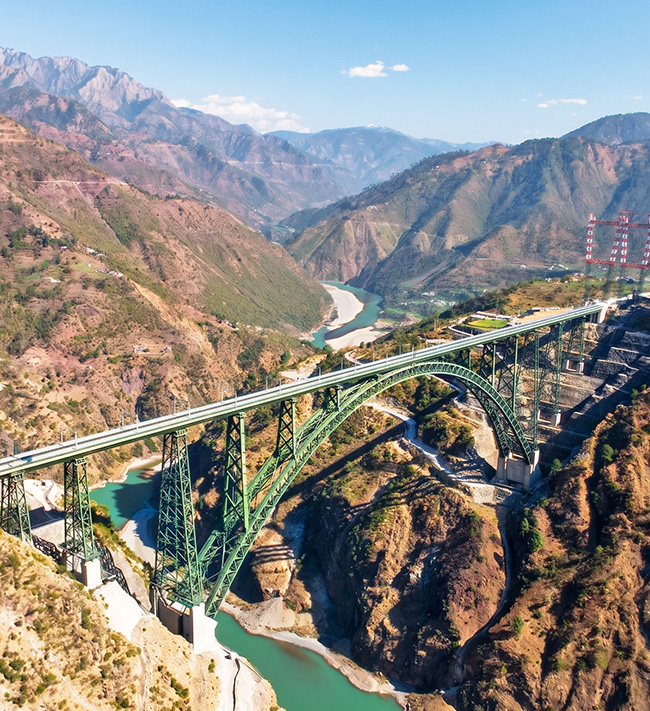
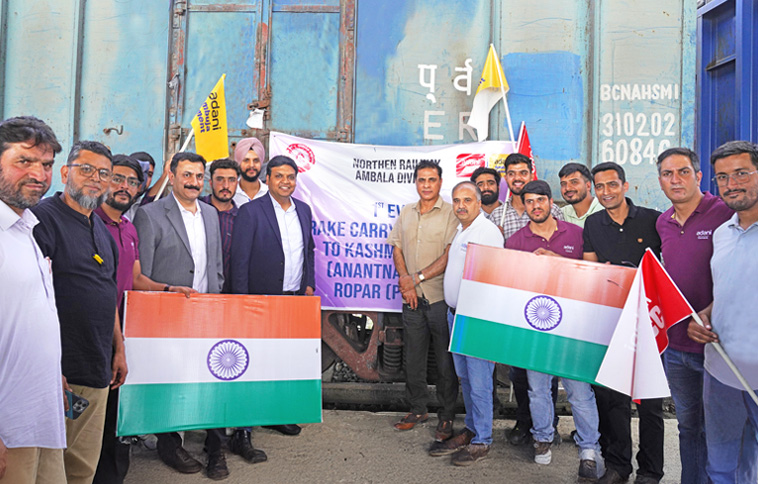
Ambuja Cements marked a
historic logistics milestone by
becoming the first company
to place a cement rake into
the Kashmir Valley, with the
consignment reaching the
newly commissioned Anantnag
Goods Shed on the Valley’s
first freight train after crossing
the iconic Chenab Bridge, the
world’s highest railway bridge. Supported by operations from
one of the world’s highest cement
plants in Himachal Pradesh,
this achievement demonstrates
the Company’s ability to deliver
reliably across some of India’s
most challenging terrains.
The commencement of freight
operations in the Kashmir Valley
strengthens service levels,
enhances market presence and brings world-class building
materials closer to a region
with significant infrastructure
potential, reaffirming Ambuja
Cements’ belief that wherever
India builds, it will be there
to strengthen the nation’s
foundations.
Cost Efficiency
Ambuja Cements remains firmly
focused on cost leadership through
a comprehensive programme of
operational and energy efficiency
initiatives to overcome the volatile
external cost environment. Fuel
costs are optimised through
higher use of alternative fuels,
supported by the installation
of chlorine bypass systems and
additional shredding infrastructure,
alongside strategic sourcing and
negotiations. Power costs are
reduced through maximisation of
renewable energy through Solar and
wind projects and the installation
and commissioning of Waste Heat
Recovery Systems (WHRS) across
suitable kiln lines. Thermal energy
consumption is further lowered by
replacing outdated clinker coolers
with high-efficiency systems to
improve heat recuperation and
reduce fuel usage. Electrical
energy intensity is addressed
through high-efficiency motors
and drives, rigorous process audits,
benchmarking and optimisation of
grinding and clinkering operations.
Productivity gains are reinforced
through advanced control systems
and digital tools to optimise kiln
and mill performance—collectively
strengthening the Company’s cost
competitiveness and long-term
sustainability.
Driver Management Centres
Ambuja Cements is strengthening
road and logistics safety through
a structured, technology-led
approach focused on prevention and
accountability. Ambuja Cements
has established world-class Driver
Management Centres (DMCs) across
its plants, manned by trained safety
professionals to safeguard the
well-being of all associated drivers.
The centres deliver structured
defensive driving programmes,
GPS-enabled monitoring and
behaviour-based safety coaching,
complemented by continuous roadsafety awareness initiatives and
stakeholder engagement.
The DMCs prioritise driver health
and dignity through regular medical
and eye check-ups, provide access
to nutritious meals, clean rest areas
and hygienic sanitation facilities.
By recognising drivers and their
families as essential partners in
the value chain, Ambuja Cements
reinforces its commitment to safer
roads, improved livelihoods and
responsible, inclusive growth.
The Company's Driver Management
Centre (DMC) network currently
covers 36 sites and 62 counsellors
for wider coverage. A Logistics
Safety Dashboard tracks key driving
risks such as over-speeding, harsh
braking/acceleration, and fatigue indicators, enabling targeted
counselling and corrective action.
To drive ownership, a Logistics
Safety Scorecard recognises topperforming drivers, transporters,
sites, and regions based on safety
KPIs and compliance. Going
forward, Ambuja Cements plans to
strengthen recognition programmes,
introduce mobile-based monitoring,
install dashcams, and implement
automated vehicle fitness checks
at gate entry to further advance its
Zero Harm ambition.

Automated ePOD & Touchless Freight Billing
Ambuja Cements implemented an
end-to-end ePOD and touchless
freight-billing system to eliminate
paper-based processes and
manual interventions across
logistics billing. Automated
validations, real-time delivery confirmation and seamless
integration with vendor portals
reduced processing time from 15
days to just 1 day, while improving
accuracy and transparency.
The initiative delivered
annualised cost savings, enabled faster vendor payments,
minimised exceptions and
strengthened auditability-demonstrating how digitalisation
can significantly enhance
logistics efficiency and
financial discipline.
Sustainable Manufacturing
The Company has adopted worldclass manufacturing practices by
leveraging advanced technologies,
streamlining production
processes and enforcing
rigorous quality controls, while
consistently improving efficiency,
lowering costs and reducing its
environmental footprint.
Perched in the Himalayas, Ambuja
Cements’ Darlaghat and ACC’s
Gagal plants exemplify how scale, resilience and sustainability can
coexist in the most challenging
environments. Darlaghat—the
world’s highest-altitude cement
plant and the Company’s largest
clinker-producing unit at 15,000
TPD—features a 6.2 km conveyor
system traversing steep terrain
to move limestone efficiently,
showcasing engineering
excellence at altitude. Nearby, the
Gagal plant complements scale
with sustainability, operating on
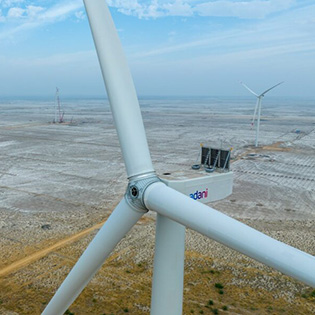
45.5 MW of renewable energy while maintaining 48% green cover
and supporting over 113 species.
Powered by AI- and IoT-enabled
operations, advanced coolers,
DeNOx systems and Waste Heat
Recovery Systems (WHRS), these
plants demonstrate that being
'highest' is not just about elevation,
but about delivering measurable
impact through future-ready,
sustainable manufacturing.
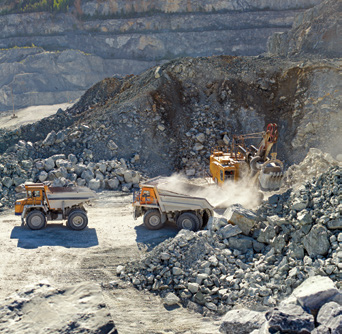
Responsible Mining
Ambuja Cements demonstrates
its commitment to responsible
mining by continuously improving
equipment productivity, optimising
fleet utilisation and minimising
stock rehandling through efficient
mine planning and procurement
practices. It also remains focused on
reducing its environmental footprint
from mining activities.
Its Mine Management approach
adheres to mining laws,
environmental regulations and
sustainability guidelines. Ambuja
Cements adopts innovative and safe
mining practices, including blastfree surface mining at Ambujanagar
and controlled blasting using
electronic detonators at other
locations. Comprehensive dust
suppression systems covered
conveyor belts and well-maintained haul roads are used to limit
emissions. Greenbelt development,
community engagement and robust
health and safety practices are also
followed across all mining sites.
In addition, structured mine closure
plans, supported by compensatory
afforestation and site rehabilitation,
reinforce the Company’s long-term
commitment to sustainable and
responsible mining.
Quality Improvement
Product Quality Management
Ambuja Cements is committed
to delivering consistently high
product quality through a robust
quality management system that
enables continuous monitoring
and control across the value chain.
Quality checks are conducted
on an hourly basis—from quarry
to dispatch—ensuring superior
cement performance for customers.
Alongside quality excellence, the
Company integrates sustainability
into its processes by maximising
the use of low-grade limestone,
substituting natural gypsum with
suitable industrial by-products,
and optimising waste utilisation
for thermal substitution. Advanced
processing techniques support
the development of customised
premium and sustainable products,
aligned with evolving market
needs while progressively lowering
the carbon footprint. Through
disciplined cost optimisation
and responsible growth, Ambuja
Cements remains focused on
delivering high-quality cement
at competitive prices, creating
enduring value for stakeholders.
100%
Compliant with BIS
Parameters
ISO 9001
Certification for 100%
of Plants
Drone Monitoring for Safe
Operations
The Company continues to
ensure manufacturing excellence
by deploying advanced drone
technology to enhance efficiency,
safety and asset reliability. Drones
are used across multiple plant
functions, including ultrasonic
thickness measurement of chimneys
and ducts, inspection of welding
and bolting in preheaters, conveyor
structures and clinker silo domes,
and thermal imaging of cyclones
and other high-temperature
zones. They also enable accurate
volumetric assessment of covered
and uncovered stockpiles. From
a safety perspective, drones
support PPE compliance checks,
monitoring of critical shutdown
activities, housekeeping audits, mine
mapping and contouring, security surveillance, confined-space
inspections in cyclones, silos, kilns
and chimneys, as well as internal
and external area surveys and truck
movement monitoring—significantly
reducing exposure to high-risk tasks.
Technical Centre of Excellence
Ambuja Cements’ Technical Centre
of Excellence (TCoE) plays a central
role in advancing the Company’s
ambition towards digital, low-carbon
and high-efficiency manufacturing.
The TCoE focuses on improving
reliability, productivity and process
efficiency across operations
by deploying best-in-class
technologies, systems and practices.
It also serves as a hub for new
product development, technical due
diligence of expansion projects and
evaluation of potential acquisitions,
ensuring strong technical alignment
with the Company’s long-term
business and sustainability strategy.
Raising the Bar for Excellence
Ambuja Cements registered a
landmark performance in the 4th
cycle of the Adani Workplace
Management Academy (AWMA)
accreditation, reflecting a
step-change in workplace
discipline and operational
maturity. Participation rose
to 55 applications (including
10 RMX entries), up from 32 in
the previous cycle. Following a
rigorous evaluation by certified assessors and 55 plant safetysteward (SS) coordinators, 43 of
55 units secured accreditation,
demonstrating widespread
adoption of AWMA standards
across sites.
The results delivered a clear
uplift in recognition: 12 Gold,
20 Silver, 8 Bronze awards and
3 Certificates of Appreciation,
materially higher than last year’s tally and evidence of continuous
improvement across safety,
housekeeping and process
discipline. The accreditation
programme catalysed stronger
teamwork, clearer operating
discipline and enhanced site
governance, while reinforcing
accountability through local
coordinators and standardised
assessment criteria.
Key Projects
| Enhancing Fuel Quality |
Advancing Reliability |
Innovations in Packing |
Innovations in Process and Production |
|
GCV/NCV Integration with TIS: Integrated Gross and Net
Calorific Value measurements with LIMS for accurate,
real-time fuel quality tracking.
|
IoT Vibration Analytics: Monitor equipment in real-time,
predicting failures and reducing downtime.
|
Cement Bag Tracking: Monitor movement from production to
delivery, improving inventory management and reducing losses.
|
ChatGPT-Based Solution Operator: Assist production teams
with real-time support, optimising processes and reducing
downtime.
|
|
CTM Integration with TIS: In
addition to Coal/Fuel testing
with LIMS, the Company
has also introduced LIMS
connectivity for automatic
data transfers in Packaging
cement bags testing as well as
physical testing of cement.
|
App-Based WBI Reporting: Enabling real-time tracking of
maintenance activities and improving team coordination and
efficiency.
|
In-plant Logistics: Optimise material movement, reducing
delays and ensuring timely delivery across departments.
|
HLC (High-Level Control) for Kiln Mills: Improving
performance, energy efficiency and product quality while
reducing operational costs.
|
| Heat Accounting Application
for Coal: Developed a Heat
Accounting app to track coal’s
heat value, enhancing fuel
efficiency and identifying
improvement areas. |
|
CCTV-AI for Print Anomaly
Detection: Identify defects
and ensure only high-quality
bags are dispatched. |
|
|
|
CCTV-AI for Bag Counting:
Providing real-time data and
reducing manual counting
errors to enhance inventory
accuracy and efficiency. |
|
 Manufactured Capital