Net-Zero Commitment
SBTi Validation for Net Zero
Ambuja Cements becomes the
leading cement company in India to
have its Near-Term (2030) as well as
Net-Zero (2050) targets validated by
the Science Based Targets initiative
(SBTi) under the Cement Sectoral
Decarbonisation Approach (SDA).
These targets comprehensively
cover Scope 1, Scope 2 and Scope
3 emissions. Ambuja Cements’
validated targets can be viewed on the https://sciencebasedtargets.
org/target-dashboard
| Near-term targets (2030) |
Net-zero targets (2050) |
| Ambuja Cements commits to
reduce gross Scope 1 and 2 GHG
emissions 18.6% per tonne of
cementitious product by 2030
from a FY 2023-24 base year.*
|
Ambuja Cements commits to
reduce gross Scope 1 and 2 GHG
emissions 94% per tonne of
cementitious product by 2050
from a FY 2023-24 base year.
Ambuja Cements finally commits
to reduce all other absolute
scope 3 GHG emissions 90%
within the same timeframe. |
*
Within this target, Ambuja Cements Limited commits to reduce gross scope 1 GHG
emissions 16.4% per ton of cementitious product and scope 2 GHG emissions 53.2%
per ton of cementitious product within the same timeframe.
Emission Reduction Targets
| GHG Emissions |
Base Year |
Target 2030 |
Target 2050 |
| Scope 1 |
529 kg/tonne of Cementitious Material |
16.4% reduction in emission intensity from base year |
- |
| Scope 2 |
22 kg/tonne of Cementitious Material |
53.2% reduction in emission intensity from base year |
- |
| Scope 1+2 |
551 kg/tonne of Cementitious Material |
18.6% reduction in emission intensity from base year |
94% reduction in emission intensity from base year |
| Scope 3 |
172 kg/tonne of Cementitious Material |
Not applicable as share of Scope 3 is less than 40% |
90% reduction in absolute emissions from base year |
Sustainability and Climate Strategy
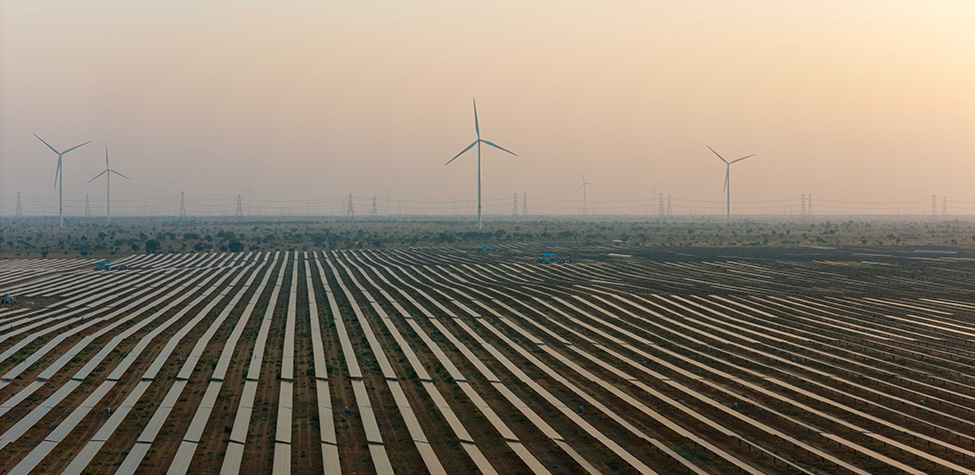
Ambuja Cements’ sustainability and
climate strategy is embedded across
core business operations, product
development, and stakeholder
engagement, with a clear focus on
reducing greenhouse gas emissions,
improving resource efficiency, and
strengthening resilience to climaterelated risks. Aligned with national
and global commitments—including India’s Nationally Determined Contributions (NDCs) under the Paris
Agreement and the UN Sustainable
Development Goals (UN SDGs)—
the Company continuously tracks
evolving technologies, regulatory
developments, and stakeholder
expectations to future-proof its
approach. To strengthen decision-making, Ambuja Cements has
conducted a comprehensive climate
risk assessment across its plants in line with TCFD and IFRS S2
guidelines, identifying key physical
and transition risks and enabling
targeted mitigation actions. The
assessment has also supported
opportunity identification and
integration into business planning,
including scaling renewable energy
adoption and installing Waste Heat
Recovery Systems (WHRS).
Strong Governance for
Sustainability Oversight
- Corporate Responsibility
Committee: Oversees
sustainability agenda and
climate change mitigation.
- Independent Directors: Provide
guidance on long-term targets.
- Senior Management: Leads
execution of sustainability
initiatives, aligning with
business goals.
- Regular Monitoring: Ensures
continuous improvement and
accountability by management
and the Board.
Climate Governance
Climate governance at the Company
follows a three-level structure. At
the highest level is the Corporate
Responsibility Committee (CRC),
made up of Independent Directors,
which oversees sustainability and
climate strategies, initiatives, and
reviews key performance indicators
(KPIs) each quarter. The second
level consists of senior management
(MANCOM), led by the CEO and CFO,
who are responsible for integrating
the broader sustainability and
climate strategies with overall business strategy. The third level
is the ESG team, headed by the
Chief Sustainability Officer, which
implements the ESG strategy,
prioritises material topics, monitors
KPI performance across the
business, and ensures alignment
with both global and national
expectations as well as those of
other stakeholders. In addition, the
Risk Management Committee (RMC)
oversees sustainability and ESGrelated risks. Climate risks are now
central to the Company's enterprise
risk management process.
Environmental Policy and
Management System
Ambuja Cements’ Environmental
Management System provides a
structured framework to ad-vance
sustainability across all operations.
It aligns company policies and
procedures with
industry best practices and
standards, enabling proactive
identification and management
of climate risks, targeted action
on waste minimisation, and
stronger resource efficiency
through recycling and reuse.
The Company also promotes alignment of its environmental
actions with national and global
climate priorities, underscoring
its broader commitment to
sustainable development. These
policies are implemented across
all sites and are overseen by the
Corporate Responsibility Committee
(CRC), consisting of Independent
Directors and reports to the Board,
en-suring strategic oversight and
accountability
ISO 14001
Certification
for 100% Plants
Climate-related Risks and
Opportunities
Ambuja Cements recognises a range
of climate-related risks-physical as
well as transition, including evolving
regulations, technology and market
risks, and physical risks such as
extreme weather events, that can
disrupt production and supply
chains. To strengthen business
continuity and long-term resilience,
the Company has undertaken a
comprehensive Climate Change
Risk Assessment across short-,
medium- and long-term horizons and
has embedded climate risks within
its Enterprise Risk Management
(ERM) framework. While these
risks are material, there are also
opportunities to drive innovation,
deepen sustainability leadership and
strengthen competitive advantage.
Climate-related Risks and
Mitigation
Physical Risks
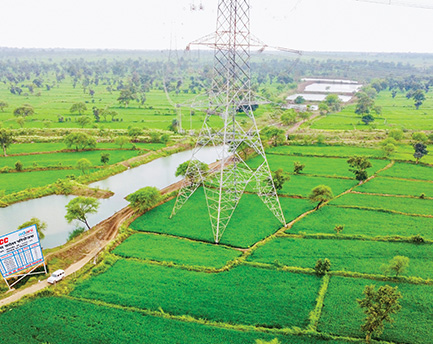
Ambuja Cements conducted a
climate risk assessment across
its sites to evaluate physical risks
such as floods, droughts, cyclones,
wildfires and temperature extremes
under IPCC-aligned scenarios SSP1-
2.6, SSP2-4.5 and SSP5-8.5. These
scenarios represent varying trajectories of greenhouse gas
emissions and their associated
climate outcomes, helping the
Company understand potential risks
under different future conditions.
This assessment spans all Ambuja
Cement’s operational sites and
evaluates potential climate impacts
across three distinct time horizons:
This assessment provided actionable
insights into potential impacts
under different warming pathways,
enabling the Company to design and
implement targeted mitigation and
resilience measures.
| Acute Physical Risks |
The study considered
following risks under acute
physical risks:
- Fluvial flooding
- Coastal flooding
- Pluvial flooding
- Cyclone
- Drought
- Wildfire
The analysis indicates that
Ambuja Cements Limited
sites do not face any risk due
to coastal flooding, wildfire,
and drought.
|
| Chronic Risks |
In chronic physical risks, main
risks considered are:
- Temperatures extremes
- Water stress
|
Physical Risks Mitigation
| Risk Subcategory |
Risk Horizon |
Risk Description |
Risk Mitigation |
Flooding
(Pluvial, Fluvial)
|
Short-term |
Excessive rainfall can trigger flooding, disrupting
operations and damaging assets.
|
Implement flood-response planning, improve drainage and
waterproofing, deploy real-time monitoring, strengthen
structures and power systems, and ensure insurance and
supply chain continuity.
|
|
Cyclone
|
Short-term |
Increased cyclone frequency and intensity can damage
infrastructure, disrupt operations, and cause major
safety risks.
|
Integrate cyclone forecasting and alerts, reinforce
structures and electrical systems, enable remote
shutdowns, secure equipment, and maintain emergency
drills and insurance coverage.
|
| Temperature
Extremes |
Long-term |
Higher temperatures can
reduce productivity, increase
equipment stress, and create
worker health and safety
risks. |
Improve heat resilience through insulation
and ventilation, shift work schedules,
deploy cooling and hydration measures,
use heat-resistant materials, and update
emergency preparedness. |
| Water Stress |
Long-term |
Increased water demand
along with depleting water
supply leads to water
scarcity or water stress.
Water stress can impact
operations and result in
potential financial losses. |
Investing in water conservation measures,
recycle water, working with local
communities to manage water resources,
harvesting water in previously mined-out
pits, regular water audits, trainings, low
water curing solutions, cool walls product. |
Climate-related Opportunities
Climate change is shifting from being viewed solely as a risk to being recognised as a major catalyst for business
innovation and growth. Organisations that proactively adapt can unlock significant new revenue streams and
improve their long-term operational resilience. Some of these are discussed below.
| Opportunity Category |
Opportunity |
Description |
|
Energy Source
|
Use of lower emission
sources of energy |
As a part of its commitment towards achieving Net Zero
emissions, the Company will continue to expand its
portfolio of renewable and green energy sources. This
will help reduce cost of energy use and reduce carbon
emissions. |
| Resource
Efficiency |
Use of alternate fuel |
Increased co-processing of wastes and enhance thermal
substitution rate leading to savings and decreased use of
fossil fuels. |
| Resource
Efficiency |
Reduced water usage and
consumption |
Opportunity to reduce water consumption and increase
recycling and reuse and be water positive. |
| Products and
Services |
Development and/or
expansion of low-carbon
products
|
Opportunity for low-carbon blended cements portfolio and
explore more innovative and sustainable products and it is
anticipated that revenue from these eco-friendly products
will increase even further.
|
| Competitive
Differentiation |
Development and/or
expansion of low-carbon
products
|
Opportunity for low-carbon blended cements portfolio and
explore more innovative and sustainable products and it is
anticipated that revenue from these eco-friendly products
will increase even further. |

Internal Carbon Pricing
Ambuja Cements has implemented
an Internal Carbon Pricing (ICP)
framework to integrate carbon
accountability into decision-making.
With an internal carbon price of
$ 28 per tonne of CO2, the Company
evaluates financial implications
of emissions across operations
and uses the insights to steer
investments towards low-carbon
alternatives and decarbonisation
goals, emissions reduction progress
and warming above 2°C.
$ 28/tonne
Internal Carbon Price
Objectives of Implementing
Internal Carbon Pricing
Emissions Reduction
Employee Engagement
Carbon Planning
Investment Decisions
Supplier Selection
Operational Efficiency
Regulatory Compliance
Global Partnerships Driving CCU Innovation
Ambuja Cements Limited has
received an Indo-Swedish grant
for a pre-pilot Technology
Feasibility study for Carbon
Capture and Utilisation (CCU)
in collaboration with the Indian
Institute of Technology Bombay
and Eco Tech, Sweden. The
project emphasises collaboration
between Swedish and Indian
partners to co-develop scalable,
sustainable, and industry ready
CO2 capture and utilisation
solutions. The study will evaluate
the technical and economic
viability of capturing CO2 from
cement operations. Captured CO2
will be channelled into materials
like calcium carbonate or to
produce green methanol using
green hydrogen pathways— shifting from conventional
carbon capture and storage to
a circular carbon economy that
reduces emissions while enabling
new green fuels and materials.
CCU will be the final step
towards the Company’s net-zero
ambition. The project reinforces
Ambuja Cement’s commitment to
responsible innovation and global
collaborations.
The Company has partnered
with IIT Bombay and Eco Tech,
Sweden to conduct
pre-feasibility study for CCUS, a
project sponsored by Department
of Science and Technology,
Government of India and Swedish
Energy Agency.
Energy Management
Ambuja Cements drives continuous
improvement through regular energy
audits that identify optimisation
opportunities and track progress
against defined targets. With
operations certified to ISO 50001,
the Company strengthens energy
management through structured
governance, performance
monitoring and employee capability
building. Training programmes,
including an in-house Energy and
Emissions course hosted on the
E-Vidyalay–Percipio platform, help
embed energy efficiency awareness
across teams.
Energy Consumption
Given the energy-intensive nature
of cement manufacturing, Ambuja
Cements closely monitors energy
performance across all sites, with
key insights reviewed in monthly
management meetings. The
Company is focused on reducing
both thermal and electrical energy
consumption through process
improvements, cost optimisation
initiatives, increased integration
of renewable energy such as
solar and wind, and efficient
utilisation of waste heat. Through
sustained innovation and targeted
investments, Ambuja Cements
remains on track to achieve its 2030
energy targets while strengthening
cost competitiveness and lowering
environmental impact.
111 million GJ
Total Energy Consumed in
FY 2025-26
2.9 GJ/tonne
of Cementitious Material
Energy Intensity
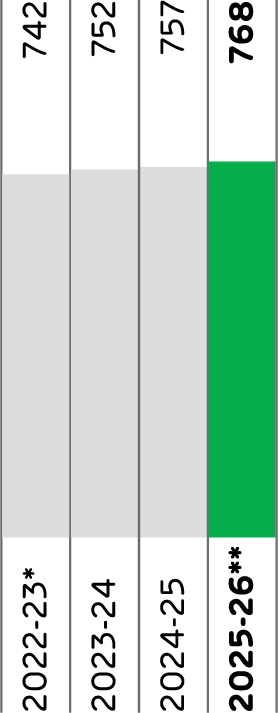
768 kCal/kg of Clinker
Thermal Energy
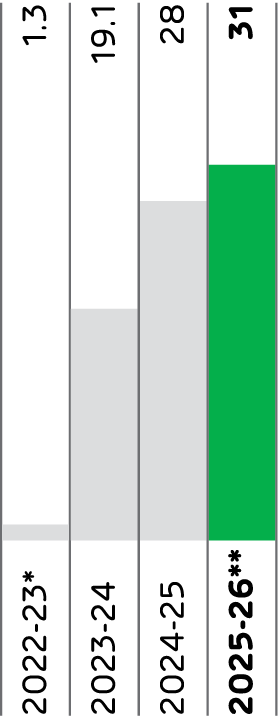
31%
Renewable and Green
Sources Power
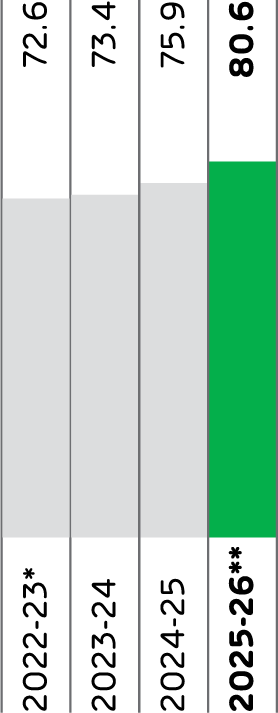
80.6 kWh/tonne Cement
Specific Electrical Energy
Consumption
GHG Emissions Accounting
The cement industry is one of the
largest industrial contributors
to global greenhouse gas (GHG)
emissions, accounting for
approximately 7–8% of global CO2
emissions. This is primarily due
to the energy-intensive nature of
cement production and the chemical
process of calcination involved in
clinker manufacturing.
| |
Total emissions |
Emission Intensity |
| Scope 1 |
22,594,612 MT |
595 kg/tonne of Cementitious Material |
| Scope 2 |
6,98,681 MT |
18.5 kg/tonne of Cementitious Material |
| Scope 3 |
8,068,750 MT |
212 kg/tonne of Cementitious Material |
Emission Reduction Initiatives
Ambuja Cement’s decarbonisation
strategy is structured across all
three emission scopes - Scope 1,
Scope 2 and Scope 3 supported by
innovation, operational efficiency, and future ready technologies.
In FY 2025-26, the Company
continued to strengthen its levers to
reduce emissions and accelerate its
journey toward net-zero.

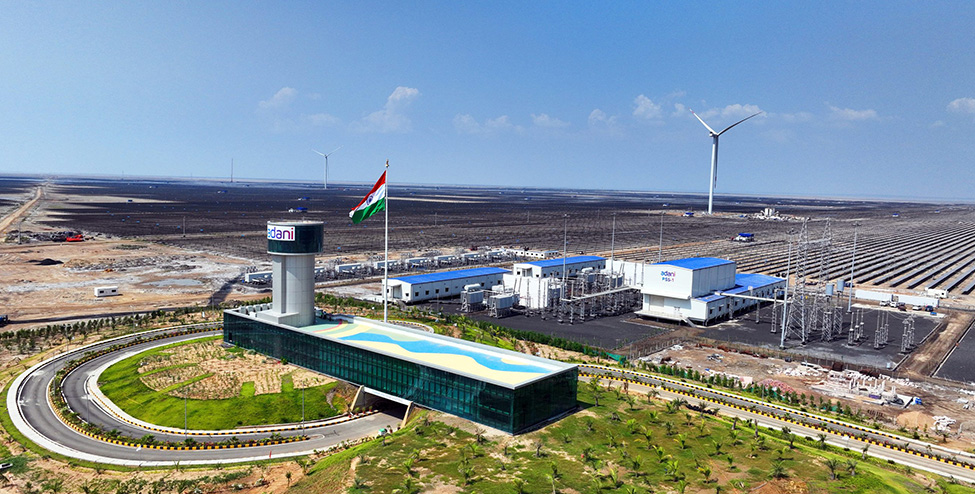
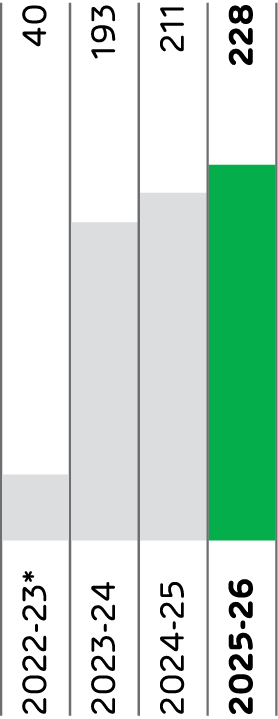
Renewable and Green Power
Ambuja Cements is making
substantial investments in
renewable energy to lower its
carbon emissions and reduce
dependence on traditional fossil
fuel-based electricity. The company
plans to increase its proportion
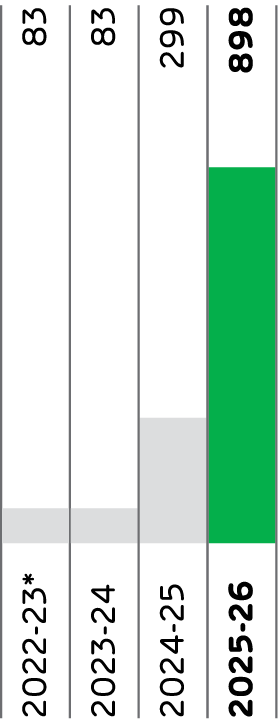
of green power to 60% by 2028, Its renewable and green energy
strategy includes installing 1 GW of
solar and wind power, along with
376 MW of Waste Heat Recovery
Systems (WHRS) by fiscal year 2028.
This approach reinforces Ambuja’s
dedication to environmental
sustainability and climate
action, supports the reduction of greenhouse gases, and promotes the
adoption of clean energy solutions.
The percentage of renewable and
green power in the company’s total
energy consumption continues to
rise each year.
Percentage Share of
Renewable and Green
Energy in Total Energy
Consumed
(%)
Renewable Energy Capacity
(MW)
*The Company has changed its financial year ending from December 31 to March 31. FY 2022-23 was for 15 months
(January 01, 2022 - March 31, 2023). Therefore, the data for FY 2023-24, FY 2024-25 and FY 2025-26 is not comparable with the figures
for the previous 15 months year ended March 31, 2023.
**In FY 2025-26 the numbers include Sanghi Industries Limited and Penna Cement Industries Limited which merged with Ambuja Cements
Limited w.e.f. March 12, 2026, and April 10, 2026, respectively.
Improving Energy Efficiency
Ambuja Cements is consistently
working to reduce both thermal
and electrical energy consumption
per tonne of product. Several
of its facilities are engaged in
India’s Perform, Achieve and Trade
(PAT) scheme, which has led to
a continuous decline in specific
thermal energy consumption over
time. Under the PAT programme,
industries identified as high-energy
consumers are required to submit
annual energy consumption reports
and undergo mandatory energy
audits. The scheme establishes
energy consumption benchmarks,
verifies savings through Energy
Saving Certificates (Ecerts), and
enables the trading of these
certificates. This initiative has
effectively reduced energy usage
and carbon emissions, thereby
supporting the advancement of
more sustainable operations.
A series of targeted interventions have been implemented across multiple
plants to improve both thermal and electrical energy efficiency.
Specific Thermal Energy Consumption
(kCal/kg clinker)
Specific Electrical Energy
Consumption
(kWh/T of Cement)
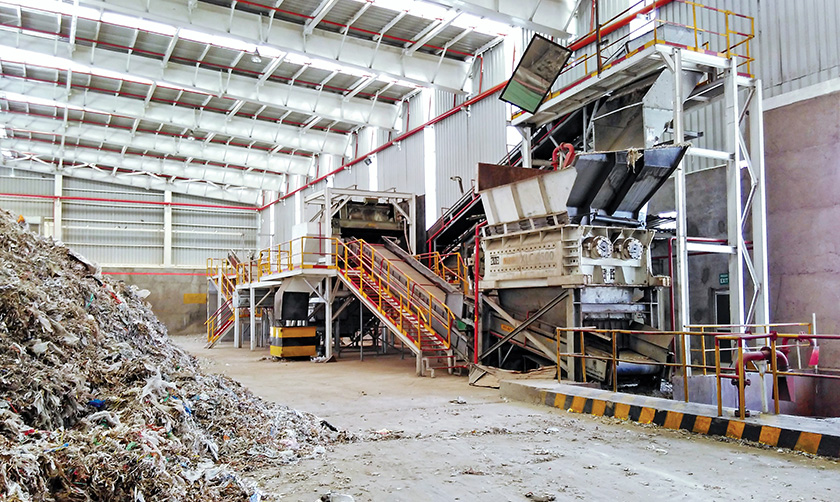
Co-processing of Waste
The cement industry is
characterised by high energy
consumption, with emissions from
fossil fuels constituting a significant
source of carbon output in this
sector. Ambuja Cements addresses
this challenge through the adoption
of advanced co-processing
technologies. The Company’s
facilities, located throughout
India, are equipped with dedicated
storage areas, feeding systems,
and laboratories to ensure efficient
operations. Pre-processing units
play a vital role in transforming
diverse waste streams—originating
from agricultural, municipal, and industrial sources—into a
homogenised mixture. This process
facilitates the effective feeding
of alternative fuels into kilns,
thereby reducing dependency on
conventional fossil fuels.
Initiatives through Geoclean to
co-process wastes are closely
aligned with the Company’s broader
sustainability strategy and carbon
reduction goals. By integrating
alternative fuels into the Company’s
fuel mix, it not only prevents wastes
from ending up in landfills and
causing environmental harm, but
also advances circular economy
principles, reduce carbon footprint
and enhance fuel flexibility.
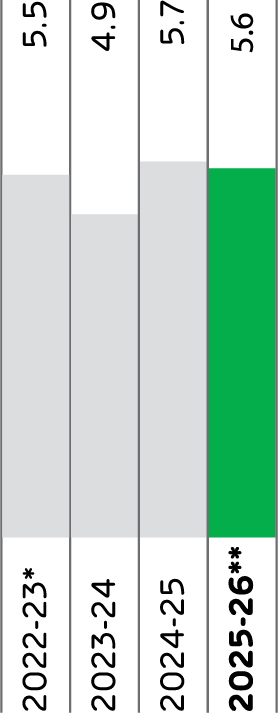
Waste Co-processed
(lakh tonne)
*The Company has changed its financial year ending from December 31 to March 31. FY 2022-23 was for 15 months
(January 01, 2022 - March 31, 2023). Therefore, the data for FY 2023-24, FY 2024-25 and FY 2025-26 is not comparable with the figures for
the previous 15 months year ended March 31, 2023.
**In FY 2025-26 the numbers include Sanghi Industries Limited and Penna Cement Industries Limited which merged with Ambuja Cements
Limited w.e.f. March 12, 2026, and April 10, 2026, respectively.
Thermal Substitution Rate
(Co-processing Rate)
The Thermal Substitution Rate
(TSR) refers to the proportion of
heating value from fossil fuels
replaced by alternative fuels such
as biomass, municipal waste, and
industrial waste. These alternative
sources possess a high calorific
value, enabling them to effectively
substitute conventional fossil
fuels, including coal and pet coke.
An increased TSR contributes to
lowering carbon emissions and
promotes the principles of a circular
economy. Ambuja Cements has set
a target to achieve a 23% TSR by
2030, underscoring its dedication
to sustainable manufacturing
practices.
Optimising Clinker Factor
Clinker is the most carbon intensive
component in cement production.
The Company is focused on
manufacturing blended cement with reduced clinker content
by integrating supplementary
cementitious materials
(SCMs) such as fly ash and slag.
Through continuous innovation
in raw mix design and increased
use of SCMs, Ambuja Cements
has been able to achieve a clinker
factor which is lower than the
industry average. This significantly
lowers CO2 emissions per tonne of
cement. The Company is investing in
research and development to further
reduce the clinker factor while
maintaining the high performance
and reliability of the products.
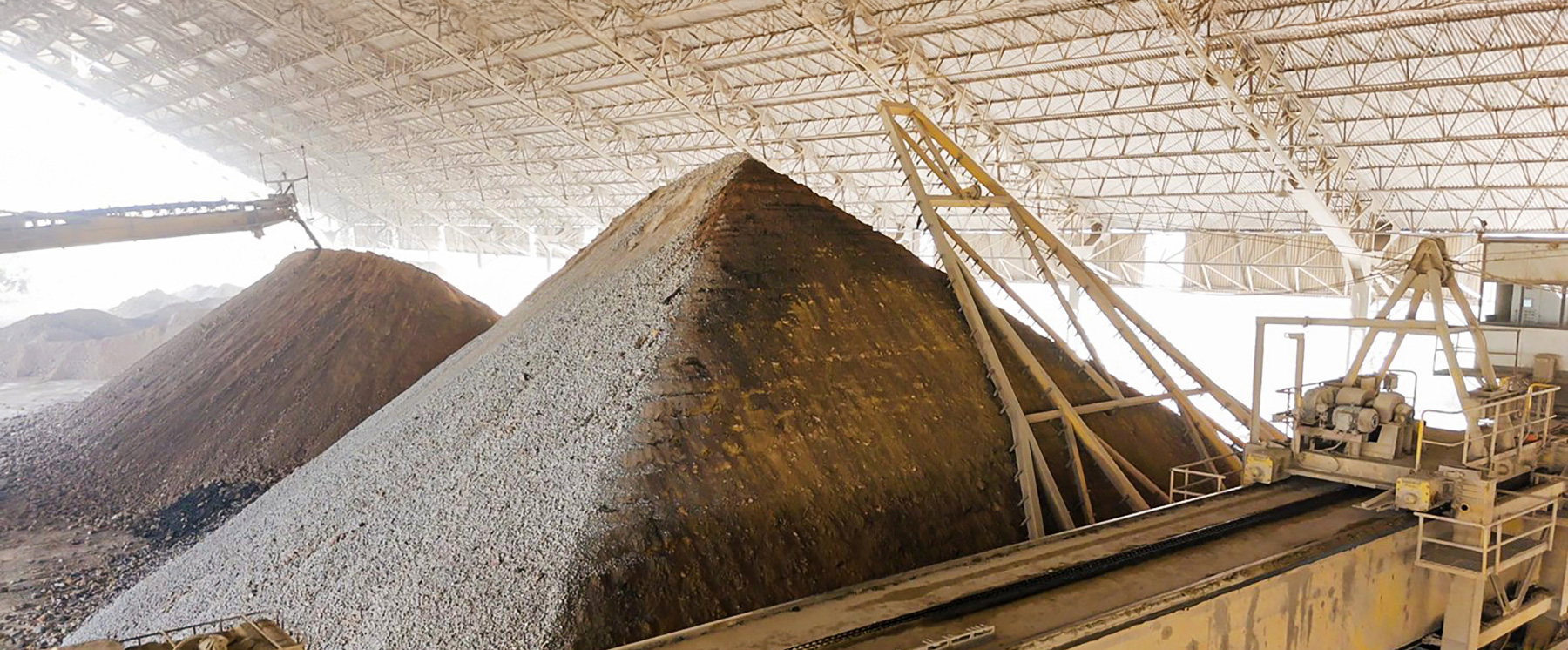
Use of Supplementary
Cementitious Material
Supplementary Cementitious
Materials (SCMs) play a vital role
in the Company’s commitment to
sustainable cement production.
The Company utilises substances
such as fly ash, slag, calcined clay,
and waste gypsum in cement manufacturing, allowing it to
partially substitute mined raw
materials in products like PPC and
PSC. To maximise the benefits of
SCMs, the Company selects and
proportions these materials with
care, considering their chemical and
physical properties as well as the
required performance standards.
Through advanced testing methods
and blending technologies, it
ensures SCMs are highly reactive,
finely ground, and free from any
harmful contaminants.
Incorporating SCMs not only drives
its decarbonisation initiatives but
also supports a circular economy by
recycling industrial byproducts that
would otherwise be disposed of in
landfills.
8.5 million tonnes
SCM Used in FY 2025-26
Use of Technology
Ambuja Cements proactively
adopting cutting-edge technologies
to accelerate its decarbonisation
journey and enhance operational
intelligence throughout its
manufacturing processes:
- Energy-Efficient Manufacturing
Solutions: It is implementing
state-of-the-art energy
optimisation technologies in
both new projects and existing
plant upgrades, driving greater
efficiency and reducing energy
consumption.
- AI-Powered Process
Optimisation: By piloting
advanced machine learning
algorithms, it can refine process
parameters, lower energy usage,
and ensure consistent product
quality.
- Smart Sensors and Real-time
Monitoring: The deployment
of intelligent sensor networks
enables it to accurately monitor emissions and respond swiftly to
maintain regulatory compliance
and optimise operational
performance.
- Digital Tools for Operational
Excellence: Leveraging
sophisticated digital platforms,
it streamlines workflows and
foster a culture of continuous
improvement across its facilities.
- Computational Fluid Dynamics
(CFD) and In-house Process
Innovation: Utilising CFD
simulations and targeted
internal enhancements, it has
increased its Productivity Rate
Index (PRI), achieved more
efficient thermal profiles and
decreased energy consumption.
These technological advancements
empower predictive maintenance,
drive process stability and deliver
ongoing efficiency improvements
across its production lines—
underscoring its commitment
to sustainable, intelligent
manufacturing.
Carbon Capture and
Utilisation
Ambuja Cements Limited
becomes the first cement
company to receive an IndoSwedish grant for a pre-pilot
Technology Feasibility study
for Carbon Capture and
Utilisation (CCU) in collaboration
with the Indian Institute of
Technology Bombay and Eco
Tech, Sweden. The project
emphasises collaboration
between Swedish and Indian
partners to co-develop scalable,
sustainable, and industry-ready
CO2 capture and utilisation
solutions. The Company plans to
utilise captured CO2 – marking
a transformative shift from
conventional carbon storage to
a circular carbon economy that
reduces emissions and enables
new green fuels and materials.
Waste Management
Ambuja Cements focuses on
recycling and co-processing to
minimise environmental impact and
prevent landfill disposal.
- Plastic waste is largely managed
through in-house co-processing,
while limited quantities (such as
burst bags) are routed through
authorised scrap dealers
- Bio-medical waste is disposed
of through incineration at
authorised facilities
- E-waste is recycled through
authorised recyclers
- Hazardous waste (such as
used oil and discarded drums)
is reused at plant level or coprocessed in cement kilns; nonprocessable quantities are sent
to common authorised facilities
- Scrap is sold to authorised
vendors
- Mining overburden is repurposed
for backfilling within mines
Waste Disposal
E-waste, biomedical waste, scrap,
and similar materials are disposed
of responsibly through authorised
recyclers approved by regulatory
bodies. Plastic waste and used oil
are co-processed in cement kilns at
several plants, eliminating landfill
dependency. Materials such as
fly ash are recycled into blended
cement manufacturing, supporting
circularity initiatives.
Zero
Hazardous Waste Sent to Landfill
Circular Economy
Ambuja Cements advanced
circularity through higher utilisation
of waste-derived resources and lowcarbon material substitution. During
the year, Ambuja Cements utilised
9.78 million tonnes of waste-derived
resources, including 0.56 million
tonnes of alternative fuels and 9.22
million tonnes of waste-derived raw
materials such as fly ash, gypsum,
and slag. This approach supports
resource conservation, maintains
product quality, and strengthens
progress towards long-term
sustainability goals.
9.78 million tonnes
of Waste-derived Resources Utilised
CASE STUDY

Geoclean – Protecting Brands, Preserving the Planet
Adani Cement’s sustainable
waste management arm,
Geoclean, partnered with a
leading FMCG companies to
pioneer a responsible solution
for market return waste—products that do not reach
consumers and require secure
end-of-life handling. Under
this partnership, trade rejects
such as juices and honey are
prevented from leaking into grey markets or reaching landfills.
It helps to safeguard consumer
safety and brand trust. Market
returns are securely channelled
through a controlled system
and co-processed at authorised
Geoclean facilities, ensuring
100% brand protection
and responsible disposal.
The initiative has delivered
measurable outcomes at scale,
with 15,000+ tonnes of market
returns diverted and operations
remaining 100% landfill-free,
reinforcing how business can
act as a catalyst for circularity
while reducing environmental
contamination and landfill
burden.
Biodiversity
Biodiversity management is a
key focus area in the Company’s
materiality assessment, recognising
that healthy ecosystems help
mitigate natural disasters and
provide critical ecological services
that support businesses and
society. The Company’s biodiversity
policy guides the identification and
evaluation of nature-related risks
across project sites and applies
a mitigation hierarchy of avoid,
minimise, restore and offset, with
progress tracked regularly. The
policy extends across operations
as well as suppliers and value chain
partners. It aims to achieve No Net
Deforestation through time-bound afforestation programmes, deliver
No Net Loss of Biodiversity across
operations (including sites near
critical habitats), and progress
towards an ultimate goal of
Net Positive Gain.
To strengthen its approach,
Ambuja Cements conducted
a comprehensive Nature
Risk Assessment, including a
Biodiversity Risk Assessment,
aligned with the TNFD LEAP
methodology. This enables the
Company to identify and disclose
nature-related dependencies (such
as reliable access to clean water)
and impacts—both positive and negative—on ecosystems.
These dependencies and impacts
may create physical risks (acute or
chronic, driven by climate events,
geological factors or ecosystem
shifts such as soil degradation)
and transition risks linked to
evolving regulatory and policy
expectations. At the same time, the
Company also recognises naturerelated opportunities that support
restoration, reduce impacts and
create value for both ecosystems
and business resilience.

Ambuja Cements becomes First Indian Cement Company to Adopt TNFD recommendations

In a landmark step towards naturepositive growth, Adani Cement—
comprising Ambuja Cements Limited
and its subsidiaries—became the
first company in the Indian cement
industry to adopt the Taskforce on
Nature-related Financial Disclosures
(TNFD) recommendations, joining
a select group of global leaders
driving sustainable manufacturing
and responsible construction. As
the world’s ninth-largest building
materials solutions provider and part
of the diversified Adani portfolio,
the Company’s adoption of TNFD
further reinforces its commitment to
embedding nature-positive principles
into long-term business strategy and
operational decision-making.
This milestone reinforces the
Company’s commitment to
systematically identify, assess,
manage and disclose nature-related
risks and opportunities, with TNFDaligned formal disclosures set to
begin from FY 2025-26.
The adoption builds on Adani
Cement’s existing nature risk
assessment and disclosure practices
aligned with globally recognised
frameworks and strengthens its
broader ESG strategy aimed at
supporting India’s climate and
nature ambitions. The initiative
also complements the Company’s
ongoing decarbonisation
efforts, including the world’s
first commercial deployment of
Coolbrook’s RotoDynamic Heater™
technology, further advancing its journey towards climate
leadership and sustainable industrial
transformation.
Backed by strong on-ground action,
the Company has already advanced
large-scale afforestation with
over 2.25 million trees planted,
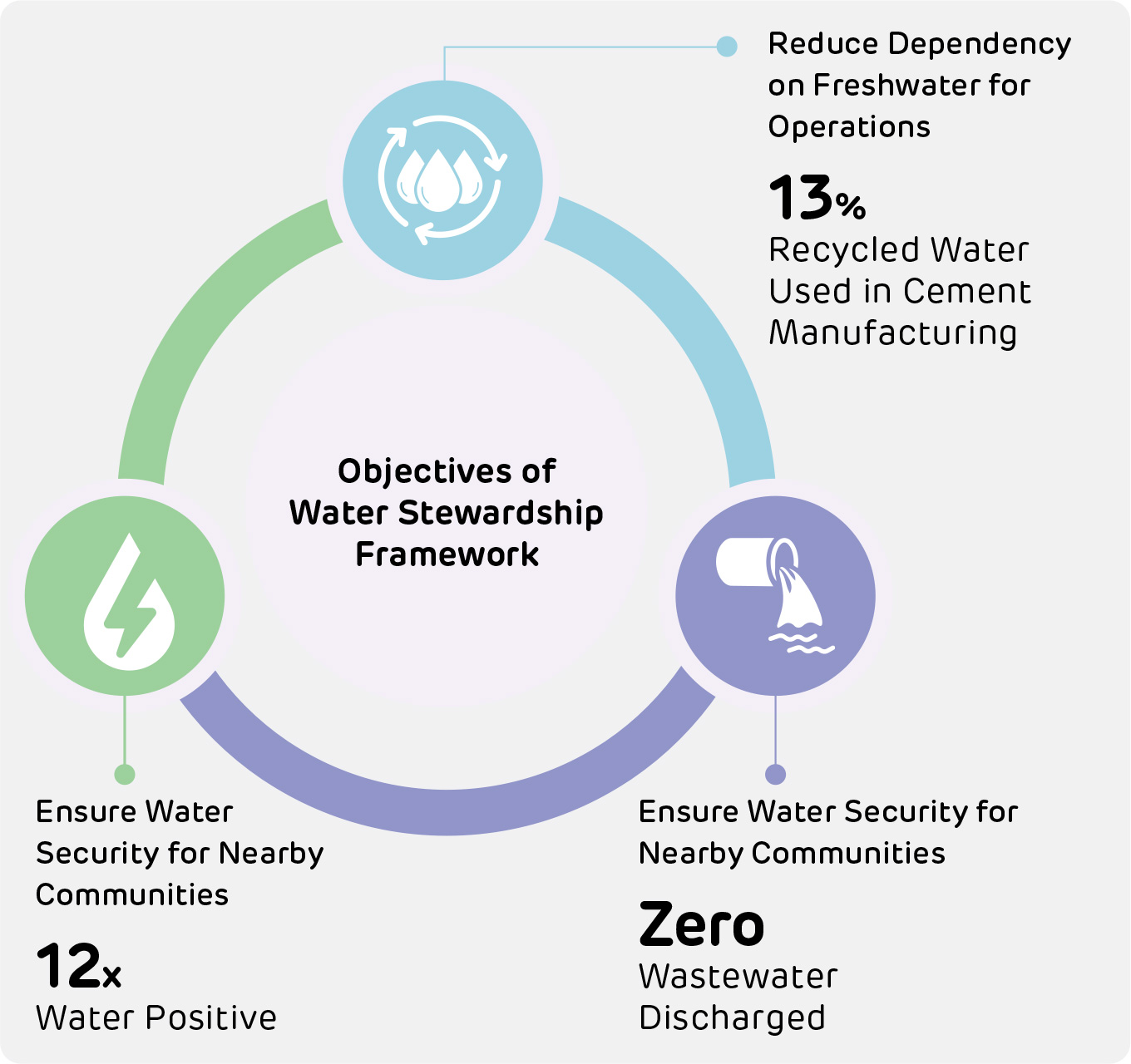
achieved 12x water positivity,
and implemented biodiversity
conservation efforts across
its operations. With a portfolio
comprising majorly of blended
cement, Adani Cement is integrating
responsible resource management
into business decision-making—
setting a new benchmark for
transparency, accountability and
environmental stewardship in India’s
cement sector.
Biodiversity Risk Assessment
As a cement manufacturer, the
Company has a direct and material
dependence on natural capital,
particularly through raw material
extraction and water use, while
also relying indirectly on ecosystem
services that regulate climate,
water cycles and protection from
natural hazards. Recognising that
mining and land-use changes can
affect biodiversity and ecosystem
resilience, the Company undertook
a comprehensive Nature Risk
Assessment, including a Biodiversity
Risk Assessment, for all its sites
except for Penna and Sanghi sites
which recently got merged with
Ambuja, and 10 km distance around
the site, to better understand these
dependencies and impacts.
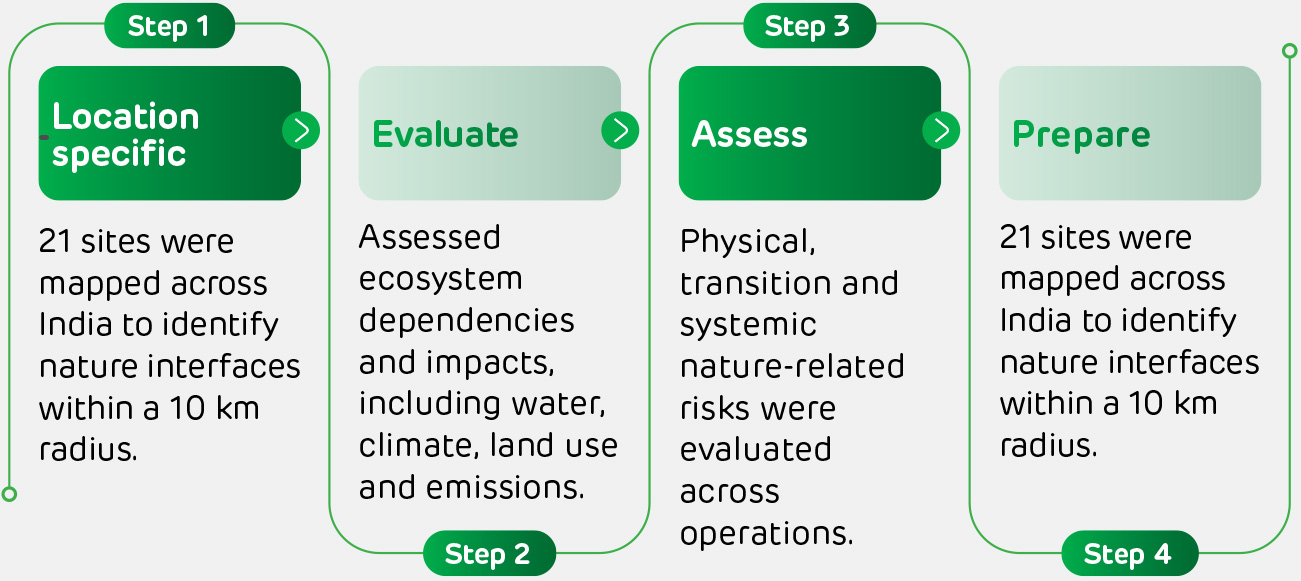
The assessment was conducted
using the Taskforce on Naturerelated Financial Disclosures
(TNFD) LEAP approach, a globally
recognised framework that
enabled the Company to map
interactions with nature, evaluate
dependencies and impacts, and
identify nature-related risks and
opportunities. These risks span
physical, transition and systemic
categories, ranging from extreme
weather and ecosystem degradation
to regulatory shifts and large-scale
ecological change.
Assessment Framework
Leading the Industry on Disclosures
Adani Cement, comprising Ambuja
Cements and its subsidiaries
and part of the diversified
Adani portfolio, has become
the first company in the Indian
cement industry to adopt the
Taskforce on Nature-related
Financial Disclosures (TNFD)
recommendations.
As the world’s ninth-largest
building materials solutions
provider, Adani Cement now
joins a select group of global
leaders championing naturepositive business transformation.
Through this commitment, the
Company will systematically
identify, assess, manage and
disclose nature-related risks and
opportunities, strengthening
its leadership in sustainable
manufacturing. This milestone
builds on recent decarbonisation
advances, including the world’s
first commercial deployment
of Coolbrook’s RotoDynamic
Heater™ technology, reinforcing
the Company’s journey towards
nature-positive growth and climate
leadership.
Biodiversity Action Plan
In response to identified risks,
Ambuja Cements developed
a comprehensive Biodiversity
Action Plan (BAP) aligned with the
International Union for Conservation
of Nature (IUCN) Mitigation
Hierarchy and built around naturebased solutions.
The BAP includes site-specific
actions such as greenbelt
development, wildlife monitoring,
rainwater harvesting structures,
and mangrove restoration
initiatives, reinforcing the
Company’s commitment to
managing biodiversity risks while
strengthening long-term ecological
sustainability.
Biodiversity Mitigation Hierarchy
| Avoid |
Reduce |
Regenerate
and Restore |
Transform |
Prevent
biodiversity
impacts at the
planning and
design stage.
Example:
Greenbelt
management
using native
species and
avoiding
monoculture,
as per CPCB
guidelines.
|
Minimise
unavoidable
impacts
through
improved
practices and
controls.
Example:
Lighting
management
by re-orienting
lights to reduce
disturbance
to nocturnal
wildlife. |
Rehabilitate
affected
ecosystems
to restore
ecological
functions.
Example:
Rainwater
harvesting
structures
and mangrove
restoration to
improve water
recharge and
revive local
water bodies. |
Drive long-term
nature-positive
outcomes
beyond
compliance.
Example:
Site-wise tree
plantation
targets and
community
partnerships
to achieve
no net
deforestation
and progress
towards net
positive. |
Biodiversity Protection and
Enhancement Measures
Ambuja Cements ensures
strict compliance with Indian
environmental laws and regulations,
including the Forest Conservation
Act and the Compensatory
Afforestation Fund Management and
Planning Authority (CAMPA) Act,
reinforcing its commitment to the
principle of No Net Deforestation.
In line with the Forest Conservation
Act, 1980 and the Compensatory
Fund Act, 2016, the Company
undertakes afforestation to
offset any forest land utilised for
operational requirements.
A comprehensive Mine Closure Plan
is implemented across all mining
locations, integrating compensatory
afforestation and site rehabilitation
measures at the time of closure.
Ambuja Cements also follows the Green Belt Development guidelines
prescribed by the Government
of India, further strengthening
ecological safeguards around its
operations.
To prevent environmental
degradation and support biodiversity
enhancement, the Company
has adopted multiple initiatives,
including active collaboration
with local communities to manage
afforested and rehabilitated
areas, along with joint oversight of
adjoining offset zones. As part of the
Adani portfolio, Ambuja Cements has
committed to planting 8.3 million
trees by 2030, with 7.2 million trees
already planted. The Company is also
implementing habitat management
plans to restore degraded
ecosystems across operational sites.
Overburden and waste materials
are disposed of systematically in designated non-mineralised zones as
per approved Mine Plans, supported
by progressive mine closure
strategies aligned with statutory
requirements. In sensitive locations
near protected areas, mining and raw
material movement are restricted to
daylight hours to minimise ecological
disturbance. To prevent spillage
during transportation, mine tippers
are equipped with advanced multicap covering systems. Continuous
training and awareness programmes
for employees and communities
further strengthen responsible
practices and help reduce
biodiversity-related impacts across
stakeholders.
IBBI Membership
Ambuja Cements Limited is
a proud member of the India
Business and Biodiversity
Initiative (IBBI)—a national
platform that enables dialogue,
knowledge sharing and
collaborative learning to integrate biodiversity considerations
into business decision-making.
Through this membership,
Ambuja Cements strengthens
its alignment with biodiversity
conservation principles.
It supports long-term ecological
balance while enabling
responsible and sustainable
growth.
Sustainable Products
Ambuja Cement significantly
contributes to reducing fossil
fuel and limestone consumption
by promoting the production of
blended and low-carbon cement.
Through the increased use of
alternative fuels, supplementary
cementitious materials such as fly
ash and slag, and waste-derived
resources, the company reduces
dependency on virgin raw materials.
This approach not only lowers
CO2 emissions but also supports
efficient resource utilisation by
minimising the extraction of mined
materials. By integrating waste
resources into the production
process and enhancing the share of
blended cement, Ambuja advances
sustainable manufacturing
while actively contributing to
environmental conservation and
circular economy practices.
78%
Share of Blended Products Sold
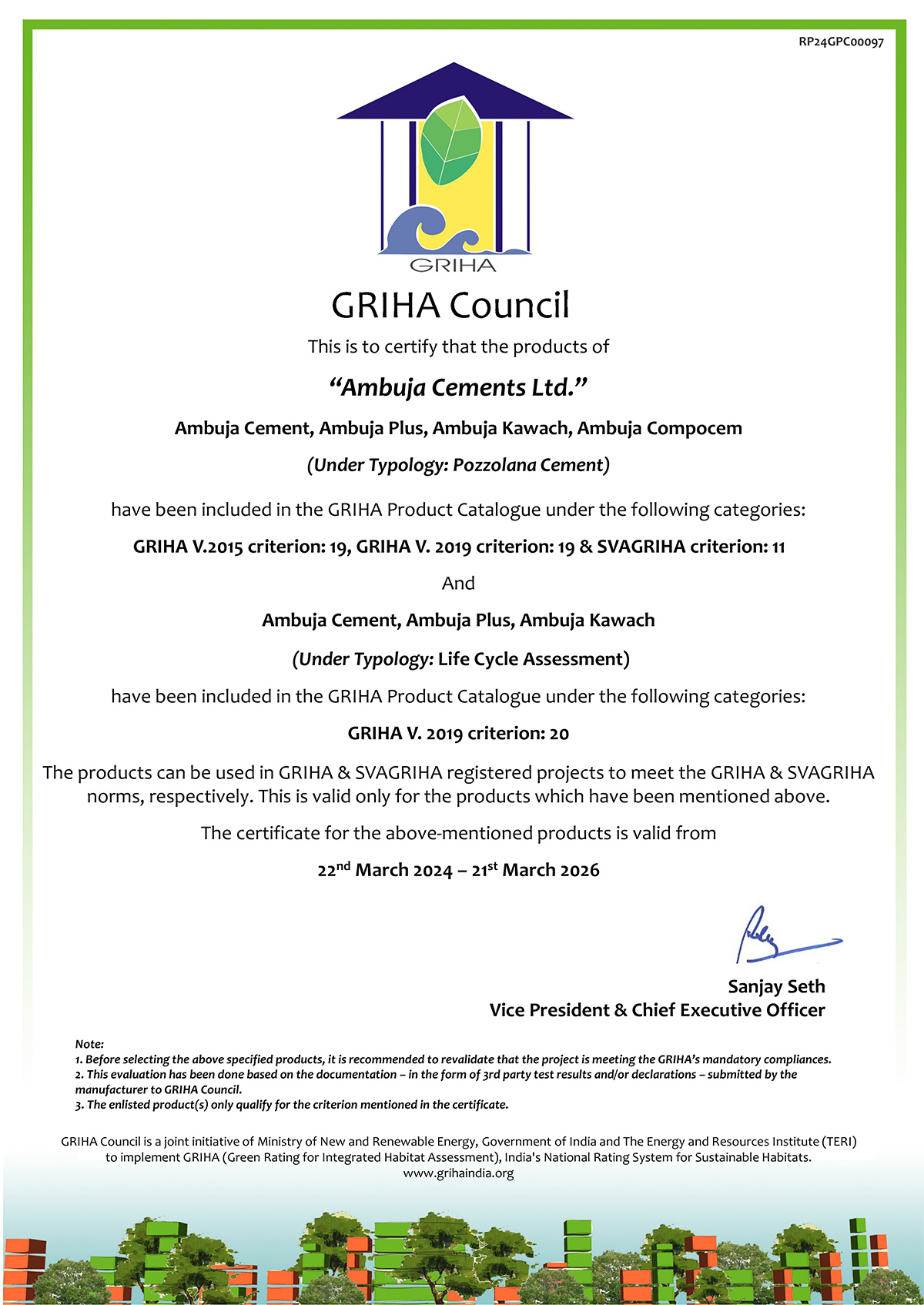
GRIHA Certification
All of its products are certified under
GRIHA (Green Rating for Integrated
Habitat Assessment)—India’s national
green rating system—reinforcing
the Company’s commitment to
responsible product innovation and
greener building outcomes.
EPD Certification
The Company has EPD (Environment
Product Declaration) for its product
portfolio – OPC as well as PPC.
The EPD was developed through a
detailed Life Cycle Assessment (LCA)
aligned with ISO 14040:2006 and ISO 14044:2006. The assessments is
independently verified under:
- ISO 14025:2006
- EN 15804:2012+A2:2019
- Product Category Rules (PCR)
EN 16908:2017
The EPD certificates of Ambuja
Cements can be accessed at:
EPD document https://www.environdec.com/library/epd22524
and https://www.environdec.com/library/epd31048. This
enables stakeholders to make
informed decisions and reinforcing
our dedication to responsible
manufacturing. Complemented by Health Product Declarations, this
approach aligns with leading green
building frameworks and responsible
construction practices.
| Category |
FY 2025-26 |
Total Revenue
from Sustainable
Products or Services
(in ` crore) |
13,515 |
Percentage of
Sustainable
Revenue |
77% |
Regulatory Compliance
Ambuja Cements acknowledges the
critical importance of regulatory
compliance in maintaining responsible
and sustainable business practices.
The Company adheres to a wide
array of environmental regulations
across its diverse operations. It
ensures that all required permissions
and approvals are obtained to
meet these regulatory obligations.
To track and manage compliance
efficiently, Ambuja Cements uses
Legatrix software. Some of the key
environmental regulations applicable
to its operations include:
- Environmental Clearances and
EIA Notification, 2006
- The Water (Prevention and
Control of Pollution) Act, 1974
- The Air (Prevention and Control
of Pollution) Act, 1981
- Noise Pollution (Regulation and
Control) Rules, 2000
- The Environment (Protection)
Act, 1986
- Hazardous and Other Wastes
(Management & Transboundary
Movement) Rules, 2016
- Solid Waste Management Rules,
2016
- Bio Medical Waste Rules, 2016
- Plastic Waste Management
Rules, 2016
- E-Waste Rules, 2016
- The Construction and Demolition
Waste Management Rules, 2016
Ambuja Cements’ commitment
goes beyond mere regulatory
compliance. The Company strives
to set a benchmark within the
industry, not only adhering to
environmental regulations but also
excelling in sustainability practices
and promoting best-in-class
environmental stewardship.
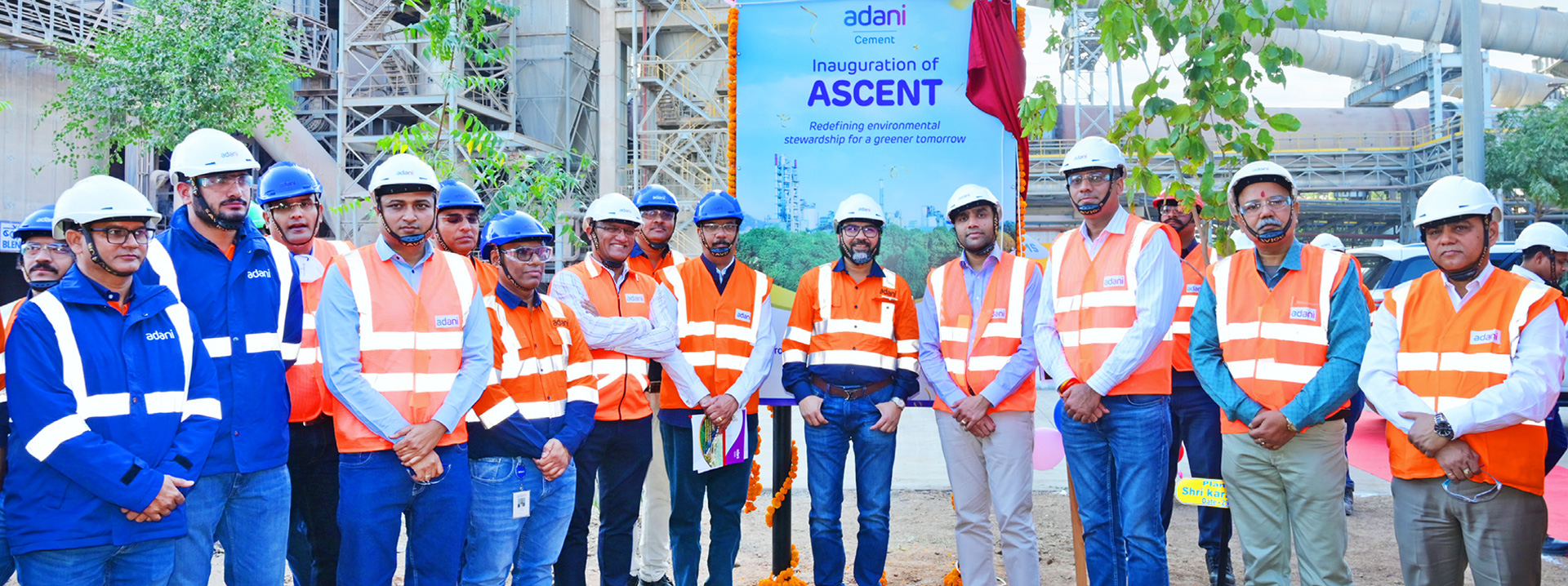
Embedding Responsibility and Resilience with ASCENT
The launch of Adani Cement’s
Sustainable, Circular,
Environmental & Net-Zero
Transformation (ASCENT)
represents a decisive step
towards strengthening
operational excellence and long-term value creation. ASCENT
provides a structured, enterprise-wide framework to enhance
environmental performance, improve operational discipline
and enable consistent, data-driven decision-making.
By integrating shared standards,
robust systems and digital tools,
it brings greater alignment,
transparency and accountability
across operations while
strengthening risk management.
More than a standalone
initiative, ASCENT is a long-term transformation that embeds
sustainability, circularity and
innovation at the core of how the
organisation operates and grows.
Aligned with India’s vision of
Viksit Bharat 2047, ASCENT
ensures that growth remains
responsible, resilient and future-ready, creating enduring value for
businesses, communities and
the nation.

 Natural Capital