Businesses should provide goods and services in a manner that is sustainable and safe
Innovation drives our pursuit of purpose-led and resilient growth. We leverage advanced science, deep consumer insights, and digital technologies to develop solutions that enhance lives while safeguarding the environment. With a strong pipeline of sustainable initiatives and robust research capabilities, we are shaping the future through impactful innovations that address evolving needs and contribute to positive change for society and the planet.
UN SDGs
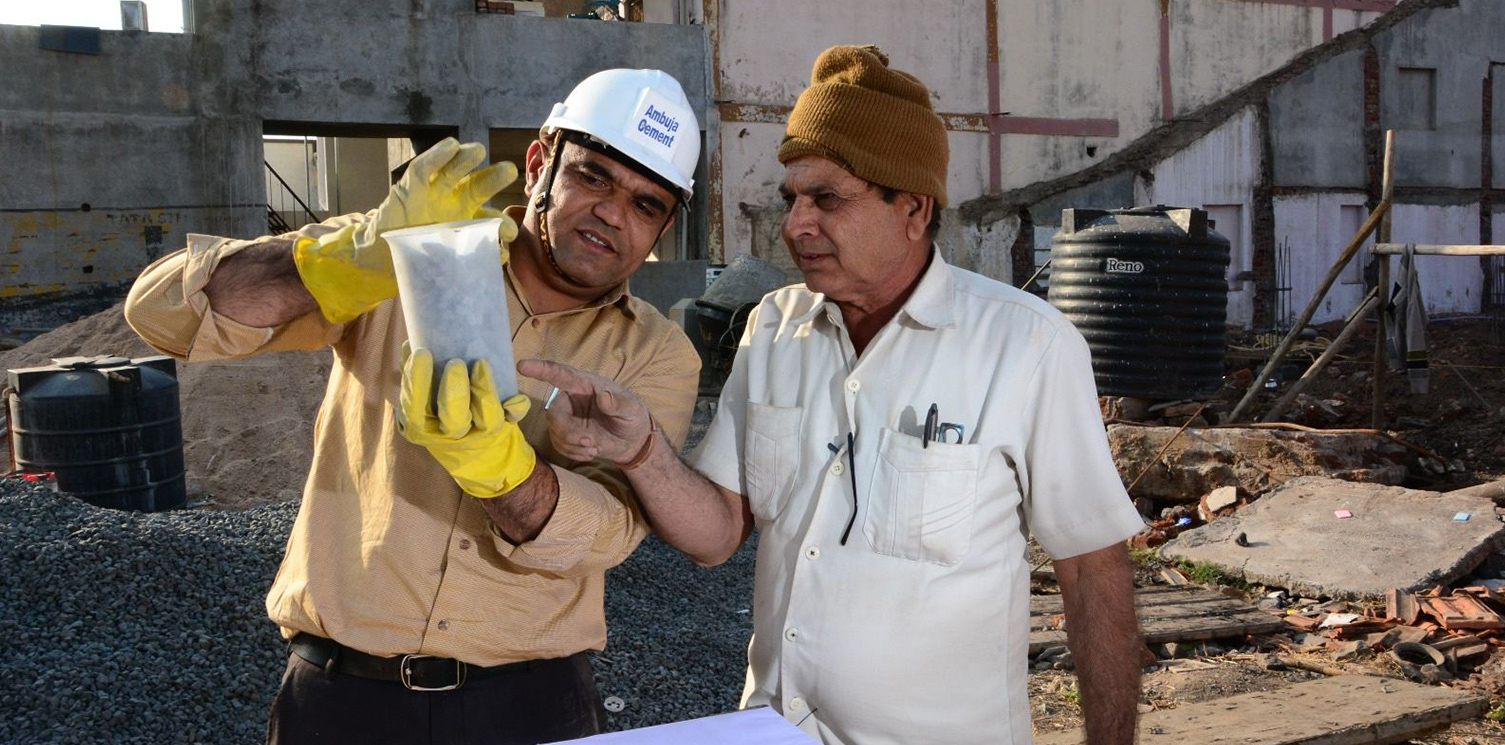
7.23x Plastic Negative
Zero Waste to landfill
89% of input material sourced locally
Supplier Code of Conduct
Essential Indicators
| #FY 2025-26 (Current Financial Year |
#FY 2024-25 (Previous Financial Year) |
Details of improvements in environmental and social impacts | |
|---|---|---|---|
| R&D | ` 1.05 Cr | ` 1.13 Cr | New Product Development with lower Clinker usage, Studies on calcined clay (CC), enhancing use of alternative materials, lowering of heat of hydration (HOC), Evaluation of Hazardous & heavy elements in Raw materials. |
| Capex | ` 3.0 Cr | ` 2.93 Cr | Efficiency Improvement, Automation, Overall, Clinker factor reduction by 1% in Blended products (PPC/ PSC/PCC) by optimising Product Mix under Circular Economy - Higher Utilisation of Mineral Inorganic Component (MIC) and byproduct. |
#This amount is spent at Adani Cement level.
Yes
b. If yes, what percentage of inputs were sourced sustainably?
- The Company has a well-defined Supplier Code of Conduct, which helps the Company to integrate ESG parameters in its procurement.
- Robust procedures are in place to ensure sustainable sourcing. All vendors undergo ESG Assessment at the time of on-boarding.
- As part of sustainable sourcing, more than 89% of input material is sourced locally i.e. within India.
- A large quantum of input material is recycled waste material consisting of industrial, municipal and agriculture waste
- The Company does not reclaim its products (cement) as it is not required but adheres to circular economy principles during manufacturing and at the end of life.
- The Company reclaim its plastics (packaging) and co-process it in cement kilns (60%) and send it to registered recyclers (40%) as per requirements of Extended Producer Responsibility (EPR) in India.
- The cement manufacturing process does not generate e-waste; however, e-waste from office operations is responsibly send to registered recyclers at the end of life.
- The major portion of hazardous waste generated during operations is co-processed in kilns within the plant or sent to registered agencies as per the permissions granted by the State Pollution Control Board.
Yes, Extended Producer Responsibility (EPR) is applicable to Ambuja Cements Limited. The Company has developed a structured waste collection and management plan that is aligned with the EPR framework submitted to the respective Pollution Control Boards. This plan ensures compliance with regulatory requirements and emphasises sustainable waste management practices. EPR for FY’26 required the company to collect 100% of plastic used recycled 60% of it by end-of-life treatment like co-processing for energy generation and 40% through registered recyclers.
Leadership Indicators
| Sr. No. | NIC Code | Name of Product/ Service | % of total Turnover contributed | Boundary for which the Life Cycle Perspective/ Assessment was conducted | Whether conducted by independent external agency (Yes/No) | Results communicated in public domain (Yes/No) | If yes, provide the web-link. |
|---|---|---|---|---|---|---|---|
| 1 | 23941 | Portland Pozzolana Cement (PPC) | 77 | Cradle-to-Gate | Yes | Yes | https://www.environdec.com/library/epd22524 |
| 2 | 23941 | Ordinary Portland Cement (OPC) | 23 | Cradle-to-Gate | Yes | Yes | https://www.environdec.com/library/epd31048 |
| Sr. No. | Name of Product/Service | Description of the risk/concern | Action Taken |
|---|---|---|---|
| 1 | PPC/OPC | Climate Change due to GHG emissions |
|
| Recycled or re-used input material to total material | |||
|---|---|---|---|
| Sr. No. | Indicate input material | FY 2025-26 (Current Financial Year) |
FY 2024-25 (Previous Financial Year) |
| 1 | Alternative Fuel (% in terms of Weight) | 13.5 | 22 |
| 2 | Alternative Raw Material (% in terms of Weight) | 29.4 | 28.1 |
| Sr. No. | Material | FY 2025-26 (Current Financial Year) |
FY 2024-25 (Previous Financial Year) |
||||
|---|---|---|---|---|---|---|---|
| Re-Used | Recycled | Safely Disposed | Re-Used | Recycled | Safely Disposed | ||
| 1 | Plastics (including packaging) | 0 | 42,658 | 0 | 0 | 27,195 | 0 |
| 2 | E-waste | NA | NA | NA | NA | NA | NA |
| 3 | Hazardous waste | NA | NA | NA | NA | NA | NA |
| 4 | Other Waste | NA | NA | NA | NA | NA | NA |
| Sr. No. | Indicate product category | Reclaimed products and their packaging materials as Percentage of total products sold in respective category |
|---|---|---|
| 1 | Cement | Cement is used in combination with various other raw materials to produce mortar and concrete. Due to this irreversible transformation during use, cement cannot be reclaimed at the end of its life cycle. As a result, there is no feasible mechanism to recover the cement product itself once it has been consumed. |
| 2 | Packaging Material | The Company reclaims 100% of its plastics (including packaging) as per Extended Producer Responsibility. |
General Disclosures
Management Process and Disclosures
Businesses should conduct and govern themselves with integrity, and in a manner that is Ethical, Transparent and Accountable
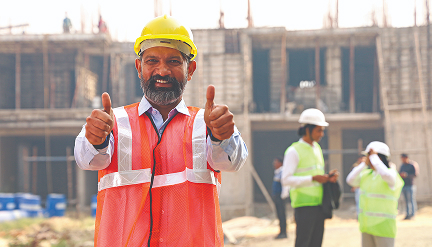
Businesses should respect and promote the well-being of all employees, including those in their value chains

Businesses should respect the interests of and be responsive to all its stakeholders
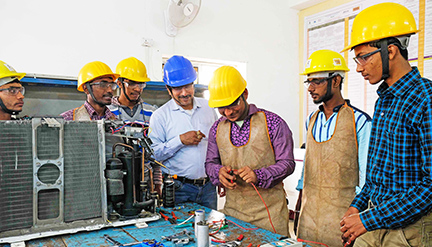
Businesses should respect and promote human rights
Businesses should respect and make efforts to protect and restore the environment
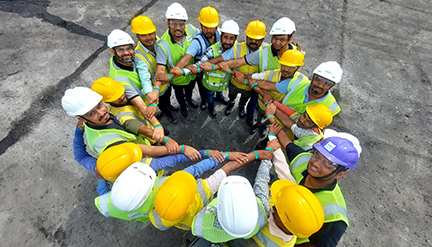
Businesses, when engaging in influencing public and regulatory policy, should do so in a manner that is responsible and transparent
Businesses should promote inclusive growth and equitable development