Businesses should respect and promote the well-being of all employees, including those in their value chains
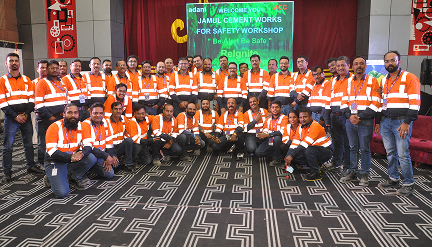
We are committed to fostering a workplace where our people can perform at their best and thrive holistically, with a strong focus on health, safety, inclusion, and overall well-being supported by robust governance. Guided by a comprehensive well-being framework covering purposeful, mental, emotional, and physical health, we ensure our people feel supported at every stage. Through behavioural safety initiatives, technology-enabled interventions, and our Employee Assistance Programme, we strengthen both physical and mental well-being. Backed by defined metrics, continuous monitoring, and a culture of accountability, we empower our people to take ownership and contribute meaningfully to organisational performance and long-term value creation.
UN SDGs


100% Employees & Workers covered under health & accidental insurance
100% Employees & Workers covered under performance & career development reviews
100% Employees covered under retirement benefits
Policy on Freedom
of Association
Essential Indicators
| Category | % of employees covered by | ||||||||||
|---|---|---|---|---|---|---|---|---|---|---|---|
| Total (A) |
Health insurance | Accident insurance | Maternity benefits | Paternity Benefits | Day Care facilities | ||||||
| Number (B) | % (B/A) | Number (C) | % (C/A) | Number (D) | % (D/A) | Number (E) | % (E/A) | Number (F) | % (F/A) | ||
| Permanent employees | |||||||||||
| Male | 3746 | 3746 | 100% | 3746 | 100% | - | - | 3746 | 100% | 3746 | 100% |
| Female | 121 | 121 | 100% | 121 | 100% | 121 | 100% | - | - | 121 | 100% |
| Total | 3867 | 3867 | 100% | 3867 | 100% | 121 | 3% | 3746 | 97% | 3867 | 100% |
| Other than Permanent employees | |||||||||||
| Male | 1101 | 1101 | 100% | 1101 | 100% | - | - | 1101 | 100% | 1101 | 100% |
| Female | 37 | 37 | 100% | 37 | 100% | 37 | 100% | - | - | 37 | 100% |
| Total | 1138 | 1138 | 100% | 1138 | 100% | 37 | 3% | 1101 | 97% | 1138 | 100% |
All employees and workers are covered under Health Insurance and Accident Insurance. Maternity and Paternity benefits are extended to all eligible employees and workers. Day care facilities are provided at all plant sites and offices.
b. Details of measures for the well-being of workers:
| Category | % of workers covered by | ||||||||||
|---|---|---|---|---|---|---|---|---|---|---|---|
| Total (A) |
Health insurance | Accident insurance | Maternity benefits | Paternity Benefits | Day Care facilities | ||||||
| Number (B) | % (B/A) | Number (C) | % (C/A) | Number (D) | % (D/A) | Number (E) | % (E/A) | Number (F) | % (F/A) | ||
| Permanent workers | |||||||||||
| Male | 884 | 884 | 100% | 884 | 100% | - | - | - | - | 884 | 100% |
| Female | 5 | 5 | 100% | 5 | 100% | 5 | 100% | - | - | 5 | 100% |
| Total | 889 | 889 | 100% | 889 | 100% | 5 | 1% | - | - | 889 | 100% |
| Other than Permanent workers | |||||||||||
| Male | 15 | 15 | 100% | 15 | 100% | - | - | - | - | 15 | 100% |
| Female | 0 | 0 | 0% | 0 | 0% | - | - | - | - | 0 | 0% |
| Total | 15 | 15 | 100% | 15 | 100% | - | - | - | - | 15 | 100% |
c. Spending on measures towards well-being of employees and workers (including permanent and other than permanent) in the following format:
| FY 2025-26 (Current Financial Year) |
FY 2024-25 (Previous Financial Year) |
|
|---|---|---|
| Cost incurred on well-being measures as a % of total revenue of the company | ` 56.77 Crore (0.23%) | ` 51.94 crore (0.28%) |
| Benefits | FY 2025-26 (Current Financial Year) |
FY 2024-25 (Previous Financial Year) |
||||
|---|---|---|---|---|---|---|
| No. of employees covered as a % of total employees | No. of workers covered as a % of total workers | Deducted and deposited with the authority (Y/N/N.A.) | No. of employees covered as a % of total employees | No. of workers covered as a % of total workers | Deducted and deposited with the authority (Y/N/N.A.) | |
| PF | 100% | 100% | Yes | 100% | 100% | Yes |
| Gratuity | 100% | 100% | NA | 100% | 100% | NA |
| ESI* | 0.8% | 0% | Yes | 0.11% | 0.31% | Yes |
| Others-please specify | NA | NA | NA | NA | NA | NA |
*In ESI, only those employees who are covered under eligibility criteria of ESI are reported here.
Are the premises / offices of the entity accessible to differently abled employees and workers, as per the requirements of the Rights of Persons with Disabilities Act, 2016? If not, whether any steps are being taken by the entity in this regard.
Yes
Yes, the Company has adopted a comprehensive Diversity, Equity, and Inclusion Policy, to ensure equal opportunities for all including Rights of Persons with Disabilities Act, 2016. This policy reflects our strong commitment to fair employment practices and to fostering an inclusive workplace. It ensures that individuals with disabilities are protected from discrimination in recruitment, career progression, and workplace practices.
In addition, the Company has established detailed guidelines for employing people with disabilities. These guidelines outline measures to promote accessibility, provide reasonable accommodation, and create a supportive work environment. Both the policy and the guidelines are publicly available at the following links
Policy on Diversity, Equity and Inclusion: https://www.ambujacement.com/-/media/Project/AmbujaLimited/Investor/ Policies1/HR-related-Policies/1--Diversity-Equity-and-Inclusion-Policy.ashx
Guidelines for Employment of Differently Abled People: https://www.ambujacement.com/-/media/Project/AmbujaLimited/Investor/Policies1/HR-related-Policies/ACL-Guidelines-for-Employment-for-DAP.ashx
The Company periodically reviews the implementation of these policies to ensure compliance with statutory requirements and to promote an inclusive and equitable work culture.
| Gender | Permanent employees | Permanent workers | ||
|---|---|---|---|---|
| Return to work rate | Retention rate | Return to work rate | Retention rate | |
| Male | 91% | 64% | Not Availed | Not Availed |
| Female | 100% | 75% | Not Availed | Not Availed |
| Total | 91% | 65% | Not Availed | Not Availed |
| Yes/No (If yes, then give details of the mechanism in brief) | |
| Permanent Workers |
Yes. The Company has established a structured grievance redressal mechanism that covers all employees and workers. Grievance/Complaint Boxes are placed across all plant locations and monitored by the HR team for written submissions. In addition, the Company provides a dedicated grievance e-mail channel for raising concerns. The Company has implemented an Employee Grievance Management Policy and constituted a Grievance Redressal Committee responsible for receiving, reviewing, and resolving grievances promptly and fairly. Any employee or worker can also connect with site HR or company CPO for redressal of grievance. Furthermore, the Company follows a Whistleblower Policy that offers a confidential reporting platform and ensures protection against retaliation. These measures reinforce transparency, accountability, and trust across the organisation. |
| Other than Permanent Workers | |
| Permanent Employees | |
| Other than Permanent Employees |
| Category | FY 2025-26 (Current Financial Year) |
FY 2024-25 (Previous Financial Year) |
||||
|---|---|---|---|---|---|---|
| Total employees / workers in respective category (A) | No. of employees / workers in respective category, who are part of association(s) or Union (B) | %(B/A) | Total employees / workers in respective category (C) | No. of employees / workers in respective category, who are part of association(s) or Union (D) | %(C/D) | |
| Total Permanent Employees | Not Applicable | |||||
| – Male | ||||||
| – Female | ||||||
| Total Permanent Workers | 889 | 889 | 100% | 876 | 876 | 100% |
| – Male | 884 | 884 | 100% | 871 | 871 | 100% |
| – Female | 5 | 5 | 100% | 5 | 5 | 100% |
Association/Union are there at worker level and 100% of workers are members of it.
| Category | FY 2025-26 (Current Financial Year) |
FY 2024-25 (Previous Financial Year) |
||||||||
|---|---|---|---|---|---|---|---|---|---|---|
| Total (A) | On Health and safety measures | On Skill upgradation | Total (D) | On Health and safety measures | On Skill upgradation | |||||
| No. (B) | % (B/A) | No. (C) | % (C/A) | No. (E) | % (E/D) | No. (F) | % (F/D) | |||
| Employees | ||||||||||
| Male | 4847 | 4847 | 100% | 4111 | 85% | 3481 | 1382 | 40% | 3481 | 100% |
| Female | 158 | 158 | 100% | 158 | 100% | 118 | 71 | 60% | 118 | 100% |
| Total | 5005 | 5005 | 100% | 4269 | 85% | 3599 | 1453 | 40% | 3599 | 100% |
| Workers | ||||||||||
| Male | 899 | 899 | 100% | 20 | 2% | 905 | 905 | 100% | 8 | 1% |
| Female | 5 | 5 | 100% | 0 | 0% | 5 | 5 | 100% | 0 | 0% |
| Total | 904 | 904 | 100% | 20 | 2% | 910 | 910 | 100% | 8 | 1% |
| Category | FY 2025-26 (Current Financial Year) |
FY 2024-25 (Previous Financial Year) |
||||
|---|---|---|---|---|---|---|
| Total (A) | No. (B) | % (B / A) | Total (c) | No. (D) | % (D / C) | |
| Employees | ||||||
| Male | 4847 | 4736 | 98% | 3481 | 3184 | 91% |
| Female | 158 | 155 | 98% | 118 | 118 | 100% |
| Total | 5005 | 4891 | 98% | 3599 | 3302 | 92% |
| Workers | ||||||
| Male | 899 | 899 | 100% | 905 | 905 | 100% |
| Female | 5 | 5 | 100% | 5 | 5 | 100% |
| Total | 904 | 904 | 100% | 910 | 910 | 100% |
- Whether an occupational health and safety management system has been
implemented by the entity?
(Yes/ No). If yes, the coverage such system?
The Company has established Occupational Health and Safety (OH&S) Management standards that are defined for all operational processes and are applicable across every site. All plants operate under a structured OH&S framework aligned with the requirements of ISO 45001:2008, ensuring a consistent approach to workplace safety and risk management. - What are the processes used to identify work-related hazards and assess
risks on a routine and non-routine
basis by the entity?
The Company follows a globally recognised Hazard Identification and Risk Assessment (HIRA) methodology to proactively identify hazards and manage work-related risks. This approach ensures that dynamic risks are mitigated in line with the Hierarchy of Controls, reinforcing the Company’s overarching commitment to Zero Harm.
All units conduct HIRA for both routine and non-routine tasks in strict accordance with the defined methodology. This structured process enables systematic identification, evaluation, and mitigation of workplace hazards, thereby ensuring safe and reliable operations across all business units. - Whether you have processes for workers to report the work-related
hazards and to remove themselves from
such risks. (Y/N)
Yes - Do the employees/ worker of the entity have access to non-occupational
medical and healthcare services?
(Yes/ No)
Yes
| Safety Incident/Number | Category | FY 2025-26 (Current Financial Year) |
FY 2024-25 (Previous Financial Year) |
|---|---|---|---|
| Lost Time Injury Frequency Rate (LTIFR) (per one million-person hours worked) | Employees | 0.08 | 0.31 |
| Workers | 0.55 | 0.44 | |
| Total recordable work-related injuries | Employees | 7 | 5 |
| Workers | 40 | 44 | |
| No. of fatalities | Employees | 0 | 0 |
| Workers | 3 | 2 | |
| High consequence work-related injury or ill health (excluding fatalities) | Employees | 0 | 0 |
| Workers | 0 | 0 |
The Company has established a well-defined Health and Safety Management System that includes annual strategic planning, periodic review of standards, procedures, and processes, and systematic tracking of effectiveness on a monthly basis. The plan is developed at the corporate level and cascades to all operation units, ensuring consistency.
To strengthen competency and capability building, a robust digital platform has been introduced for employees and workers. Various campaigns, events, and initiatives are conducted to enhance awareness and embed a strong safety culture. This year, a structured monthly campaign calendar has been launched to sustain focus:
- March & April – SOP Awareness: “SOP हे – सुरक्षा की गारंटी”
- May – Boots on Ground (BOG): Active field presence and hazard identification
- June – ROKO TOKO: Stop unsafe acts, encourage intervention
- July – Tools Safety: “It’s in your hand” – safe use of tools
- Aug & Sep – No Repeat: Prevent recurrence of incidents and near misses
- Oct – Bye Bye Bypass: Eliminate unsafe shortcuts, enforce compliance
- Nov & Dec – Isolation Practices: “Isolation – एक अटूट दीवार”
- Jan & Feb – Road Safety: Defensive Driving
In addition, a Reward & Recognition programme acknowledges employees and teams demonstrating exemplary safety practices, including campaign winners. Senior leadership ensures active engagement through daily site tours of at least two hours by each management staff, aimed at identifying safety risks and ensuring timely mitigation.
| FY 2025-26 (Current Financial Year) |
FY 2024-25 (Previous Financial Year) |
|||||
|---|---|---|---|---|---|---|
| Filed during the year | Pending resolution at the end of year | Remarks | Filed during the year | Pending resolution at the end of year | Remarks | |
| Working Conditions | 0 | 0 | NA | 0 | 0 | NA |
| Health & Safety | 0 | 0 | NA | 0 | 0 | NA |
| % of your plants and offices that were assessed (by entity or statutory authorities or third parties) | |
|---|---|
| Health and safety practices | 100% |
| Working Conditions |
The Company has implemented several corrective actions to incorporate learnings from safety-related incidents, strengthening both logistics and manufacturing operations.
Logistics Safety
- Streamlined traffic flow with designated pedestrian walkways to minimise man–machine interaction.
- Established a Driver Management Centre, staffed with a dedicated counselor to improve driver behavior through counseling and training.
- Developed a dashboard to manage training logistics and monitor safety performance.
- Installed anti tilting devices to enhance vehicle stability.
Manufacturing Operations
- Installed robust fall protection systems, including guardrails, safety nets, and appropriate PPE, supported by regular inspections.
- Introduced risk reduction initiatives such as auto samplers for hot meal sampling, safety umbrellas, and mechanised dummies during preheater shutdowns.
- Deployed drones for inspections in high risk areas to enable early hazard detection and mitigation.
- Issued helmet mounted voltage detectors to electricians for real time voltage detection and prevention of electrical hazards.
- Enhanced electrical safety through a comprehensive programme covering Lock Out, Tag Out, Try Out (LOTOTO) procedures, arc flash hazard assessments, routine equipment inspections, and mandatory training.
- Reinforced structural integrity by covering floor openings to prevent accidental falls.
- Implemented centralised monitoring of coal meal alarms, supported by third party structural inspections.
Engagement & Awareness: Launched monthly Safex & Boots on Ground (BOG) webinars for all employees to introduce and reinforce new digital safety initiatives.
Leadership Indicators
(A) Employees (Y/N) - Yes
(B) Workers (Y/N). - Yes
The departments concerned monitor and verify that value chain partners duly deduct and deposit all applicable statutory dues within the prescribed timelines. This process is supported by documented evidence, periodic reviews, and record keeping ensuring adherence to legal and contractual obligations.
| Total no. of affected employees/ workers | No. of employees/workers that are rehabilitated and placed in suitable employment or whose family members have been placed in suitable employment | |||
|---|---|---|---|---|
| FY 2025-26 (Current Financial Year) |
FY 2024-25 (Previous Financial Year) |
FY 2025-26 (Current Financial Year) |
FY 2024-25 (Previous Financial Year) |
|
| Employees | 0 | 0 | 0 | 0 |
| Workers | 0 | 0 | 0 | 0 |
The entity provides transition assistance measures to support employees during career transitions arising from retirement, resignation, or separation, with an objective to facilitate continued employability and ensure responsible management of career endings. Such support is embedded within the organisation’s people practices and includes, as applicable, retirement planning support, financial awareness sessions, internal redeployment or role transition opportunities, skill enhancement initiatives, and structured exit processes. These measures are implemented in compliance with applicable labour laws and internal policies and are designed to ensure dignity, fairness, and continuity during workforce transitions.
| % of value chain partners (by value of business done with such partners) that were assessed | |
|---|---|
| Health and safety practices | 100% of contractors undergo through Pre-qualification (PQ) check & Safety Audit. |
| Working Conditions |
The Company has strengthened its safety practices by implementing corrective measures across Value Chain Partners.
- Traffic flow has been streamlined with pedestrian walkways, a Driver Management Centre established for counseling and training, safety dashboards introduced, and anti-tilting devices installed to enhance vehicle stability.
- Robust fall protection systems, drones for high risk inspections, helmet mounted voltage detectors, and advanced electrical safety programmes LOTOTO (Lock Out, Tag Out, Try Out), arc flash assessments) have been deployed. Structural integrity has been reinforced, coal meal alarms centrally monitored, and explosion vents installed to mitigate risks.
- Monthly Safex and BOG (Boots on Ground) webinars, along with awareness and recognition initiatives, continue to embed a strong safety culture across value chain.
These actions reflect Ambuja’s commitment to “Zero Harm,” ensuring safer workplaces, stronger accountability, and continuous improvement across its value chain.
General Disclosures
Management Process and Disclosures
Businesses should conduct and govern themselves with integrity, and in a manner that is Ethical, Transparent and Accountable
Businesses should provide goods and services in a manner that is sustainable and safe

Businesses should respect the interests of and be responsive to all its stakeholders
Businesses should respect and promote human rights

Businesses should respect and make efforts to protect and restore the environment
Businesses, when engaging in influencing public and regulatory policy, should do so in a manner that is responsible and transparent
Businesses should promote inclusive growth and equitable development